



Ecosystem Change and Disturbance
Ecosystem Change and Disturbance
Learn more about FORT research on ecosystem change and disturbance.
Ecosystem change research in support of the Department of the Interior
Ecosystem change research in support of the Department of the Interior
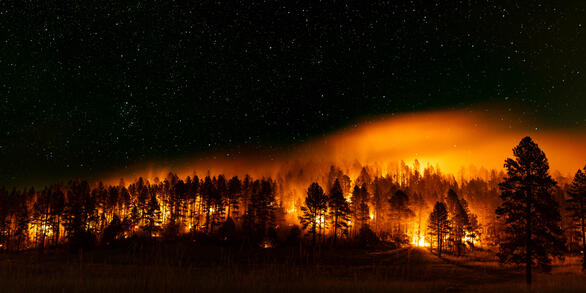
FORT researchers provide sound science to support the Department of the Interior in its efforts to manage wildfires, conserve water, reclaim public lands for multiple uses, and promote food security.
Filter Total Items: 111

Landscape and Habitat Assessment
A central focus of this program is to conduct multi-scale assessments in order to develop related geospatial decision-support tools and methods. The program includes synthesizing broad-scale datasets and developing innovative approaches to assess the vulnerability and resilience of wildlife habitats and ecosystems, relative to land management decisions and ecosystem stressors on Department of the...

The Western Mountain Initiative (WMI)
Western Mountain Initiative (WMI) is a long-term collaboration between FORT, WERC, NOROCK, USFS, NPS, LANL, and universities worldwide to address changes in montane forests and watersheds due to climate change. Current emphases include altered forest disturbance regimes (fire, die-off, insect outbreaks) and hydrology; interactions between plants, water, snow, nutrient cycles, and climate; and...

Tree Mortality Patterns and Processes
Episodic droughts have long been known to trigger accelerated tree mortality in forests worldwide, including in the Southwest U.S. Scientific understanding of the process drivers and spatial patterns of tree mortality is surprisingly limited, constraining our ability to model forest responses to projected increases in drought. The onset of regional drought since the late 1990s has resulted in...

Post-fire Recovery Patterns in Southwestern Forests
High-severity crown fires in Southwestern dry-conifer forests — resulting from fire suppression, fuel buildups, and drought — are creating large treeless areas that are historically unprecedented in size. These recent stand-replacing fires have reset extensive portions of Southwest forest landscapes, fostering post-fire successional vegetation that can alter ecological recovery trajectories away...
The Wyoming Landscape Conservation Initiative (WLCI)
The Wyoming Landscape Conservation Initiative (WLCI) addresses effects of land-use and habitat changes on Southwest Wyoming’s natural resources. In partnership with twelve Federal, State, and local natural resource agencies, and non-governmental organizations– FORT and ten other USGS centers are conducting dozens of integrated science projects to assess the status of Southwest Wyoming’s natural...

Ecological Flows
This research examines how water flows affect populations, communities, ecosystems, and hydroscapes. Studies elucidate the interactions among hydrologic, geomorphologic, biogeochemical, biological, and anthropogenic processes. Scientists identify and quantify the spatial and temporal attributes of water flow for ecological needs. Flow alternations by humans are a primary contributor to the...

Western Mountain Initiative: Southern Rocky Mountains
Mountain ecosystems of the western U.S. provide irreplaceable goods and services such as water, wood, biodiversity, and recreational opportunities, but their potential responses to projected climatic patterns are poorly understood. The overarching objective of the Western Mountain Initiative (WMI) is to understand and predict the responses—emphasizing sensitivities, thresholds, resistance, and...

Western Mountain Initiative: Central Rocky Mountains
Mountain ecosystems of the western U.S. provide irreplaceable goods and services such as water, wood, biodiversity, and recreational opportunities, but their responses to global changes are poorly understood. The overarching objective of the Western Mountain Initiative (WMI) is to understand and predict the responses, emphasizing sensitivities, thresholds, resistance, and resilience, of Western...

Assessing Impacts to Ecosystems from Uranium Mining in the Grand Canyon Region
The use of uranium is an alternative energy source to petroleum products and some of the United States’ highest quality ore is located on the Colorado Plateau. However, some regions where suitable mining efforts are conducted include areas that are near important environmental resources such as National Parks that provide viewscapes and habitat for wildlife.

Resources for Understanding the Effects of Wind Energy Development
As the Nation strives to lessen its dependence on foreign oil, domestic energy production has increased dramatically. This is especially true for renewable energy sources such as wind: from 2007 to 2009, for example, wind energy development increased 341 percent in Wyoming, and it continues on that trajectory today. However, the effects of renewable energy development on wildlife and habitats...

Surface Disturbance and Reclamation Tracking Tool (SDARTT)
The Bureau of Land Management (BLM) and the United States Geological Survey (USGS) have partnered to create the Surface Disturbance Analysis and Reclamation Tracking Tool (SDARTT). SDARTT is to be the national repository for and analysis tool of disturbance data pertaining to public land operations for the BLM. Users will upload disturbance and reclamation data to SDARTT to map, analyze, and...

Field of Sagebrush Dreams: Planting and Restoring Functional Sagebrush in Burned Landscapes
Increased wildfire-induced loss of sagebrush in North American shrublands are outpacing natural recovery and leading to substantial habitat loss for sagebrush-obligate species like sage-grouse. The products and information developed for this project will help restoration practitioners, biologists, and land managers evaluate the efficacy of sagebrush restoration approaches as well as their ability...