



Ecosystem Change and Disturbance
Ecosystem Change and Disturbance
Learn more about FORT research on ecosystem change and disturbance.
Ecosystem change research in support of the Department of the Interior
Ecosystem change research in support of the Department of the Interior
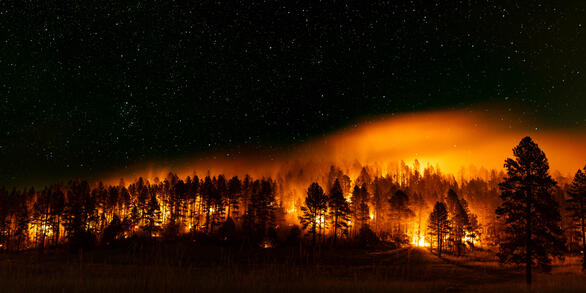
FORT researchers provide sound science to support the Department of the Interior in its efforts to manage wildfires, conserve water, reclaim public lands for multiple uses, and promote food security.
Filter Total Items: 111

Characterizing the environmental drivers of range-wide gene flow for greater sage-grouse
Widespread anthropogenic development in the sagebrush steppe and shifting drought and wildfire patterns have contributed to the observed dramatic declines of the greater sage-grouse since the 1960s. Alteration of the sagebrush habitat can affect many aspects of the species life history, including survival and local resource use. Over many years, the combined effects of landscape composition on...

Linking post-fire sagebrush restoration and sage-grouse habitat recovery
Many revegetation projects are intended to benefit focal wildlife species. Yet, few scope the ability of revegetation efforts to yield habitat. To investigate the ability of alternative sagebrush planting strategies to recover habitat conditions for wildlife like sage-grouse, USGS and Colorado State University scientists developed a spatial vegetation-habitat recovery model. Scientists combined...

Prioritizing sagebrush protection and restoration within the upper Colorado River Basin
Arid shrublands of western North America face growing threats from disturbances such as wildfire, drought, and invasive species. These threats are increasingly altering the sagebrush ( Artemisia species) biome and degrading habitat for species of conservation concern such as greater sage-grouse ( Centrocercus urophasianus). Effective management and restoration are needed to slow or reverse these...

Siren: The National Early Detection and Rapid Response Information System
Siren: the National Early Detection and Rapid Response (EDRR) Information System is an online resource for invasive species information sharing and collaboration that serves as the information hub of the National EDRR Framework.

New Mexico Tree-Ring Science
Tree-ring science is a component of our interdisciplinary ecological research program that focuses on the effects of drought and human land use on forest ecology, fire ecology, and ecohydrology.

The New Mexico Landscapes Field Station
The New Mexico Landscapes Field Station is a place-based, globally connected, ecological research group that studies ecosystem and wildlife dynamics, working with land managers, community leaders, and Tribes to deliver solutions that foster the linked health of human and natural systems. For over three decades, we have focused on shifting research needs from forest watershed health to wildlife...

New Mexico Landscapes Field Station: Forest Ecosystem Research
Below are ongoing or completed research projects related to forest ecosystems at the New Mexico Landscapes Field Station.

New Mexico Landscapes Field Station: Fire Research
Below are ongoing or completed research projects related to fire at the New Mexico Landscapes Field Station.

New Mexico Landscapes Field Station: People
Staff associated with the New Mexico Landscapes Field Station.

Influence of future climate scenarios on habitat and population dynamics of greater sage-grouse
Sagebrush ecosystems and sagebrush-dependent wildlife species are likely to experience more frequent extreme drought and temperature conditions with changing climate. Greater sage-grouse ( Centrocercus urophasianus), an indicator species in sagebrush ecosystems, may experience habitat and population losses that are increasingly exacerbated by current and future climate change. However, the direct...

Spatiotemporal conditions of vegetation and invasive plant species on mine lands.
To support the Department of Interior's bureaus, states, and local communities, we are developing 1) a document highlighting remote sensing approaches that can be leveraged for site prioritization, recovery design, and long-term assessments of recovery trends, and 2) data products of vegetation conditions, change, recovery potential, and risk of exotic plant invasion on mine lands. We will...

Predicting risk of annual grass invasion following fire in sagebrush steppe and rangeland ecosystems
This project analyzes on-the-ground plant monitoring data across sagebrush and rangeland ecosystems to examine how fire, climate, topography, and plant communities influence the success of invasive annual grasses after fires.