



Ben Lohre and Andrea Schuhmann test acoustic microphones prior to bat surveys, as part of the 2023 NABat field season.
Images
See our science through the images below.
Filter Total Items: 3592
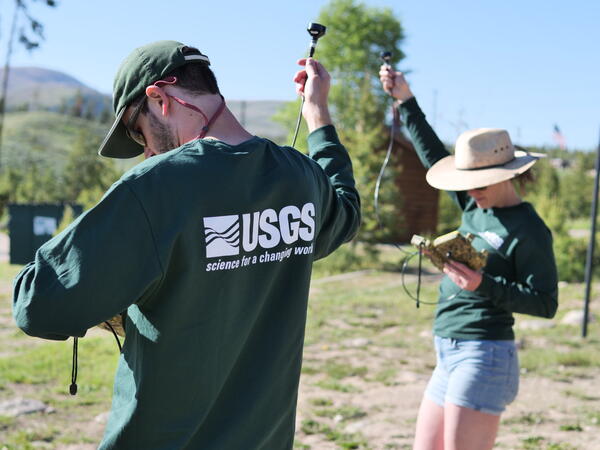
Testing acoustic microphones
Ben Lohre and Andrea Schuhmann test acoustic microphones prior to bat surveys, as part of the 2023 NABat field season.
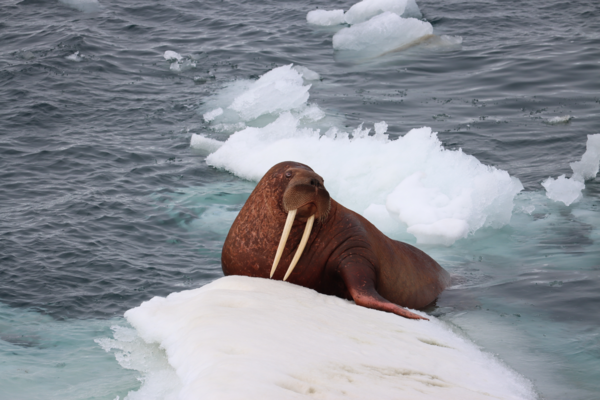
Adult female Pacific walrus sliding into the water
Adult female Pacific walrus sliding into the waterAn adult female Pacific walrus slides into the water as she assesses her surroundings. The female is 15 years or older based on the length of the tusks. USGS and the U.S.
Adult female Pacific walrus sliding into the water
Adult female Pacific walrus sliding into the waterAn adult female Pacific walrus slides into the water as she assesses her surroundings. The female is 15 years or older based on the length of the tusks. USGS and the U.S.
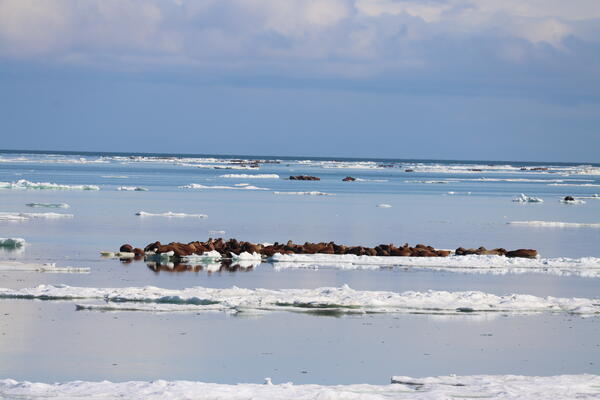
A large and noisy walrus group amidst an aggregation of groups
A large and noisy walrus group amidst an aggregation of groupsAlarge, active, and noisy walrus group hauled on sea ice in the Chukchi Sea. USGS and the U.S.
A large and noisy walrus group amidst an aggregation of groups
A large and noisy walrus group amidst an aggregation of groupsAlarge, active, and noisy walrus group hauled on sea ice in the Chukchi Sea. USGS and the U.S.
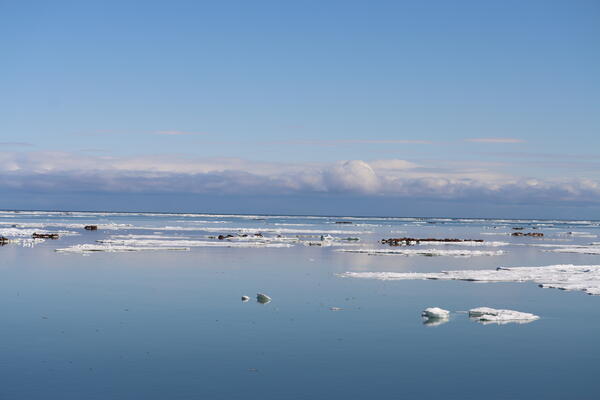
Walruses everywhere
Walrus groups hauled on sea ice as far as the eye can see in the Chukchi Sea. USGS and the U.S.
Walrus groups hauled on sea ice as far as the eye can see in the Chukchi Sea. USGS and the U.S.
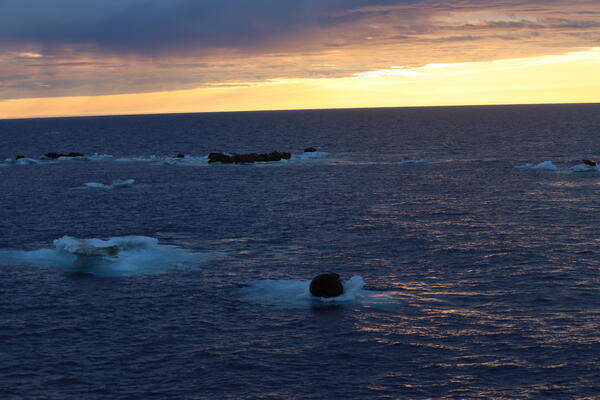
Arctic sunrise over resting walruses
A dim light shines during the summer Arctic morning in the Chukchi Sea as groups of Pacific walruses rest. USGS and the U.S.
A dim light shines during the summer Arctic morning in the Chukchi Sea as groups of Pacific walruses rest. USGS and the U.S.
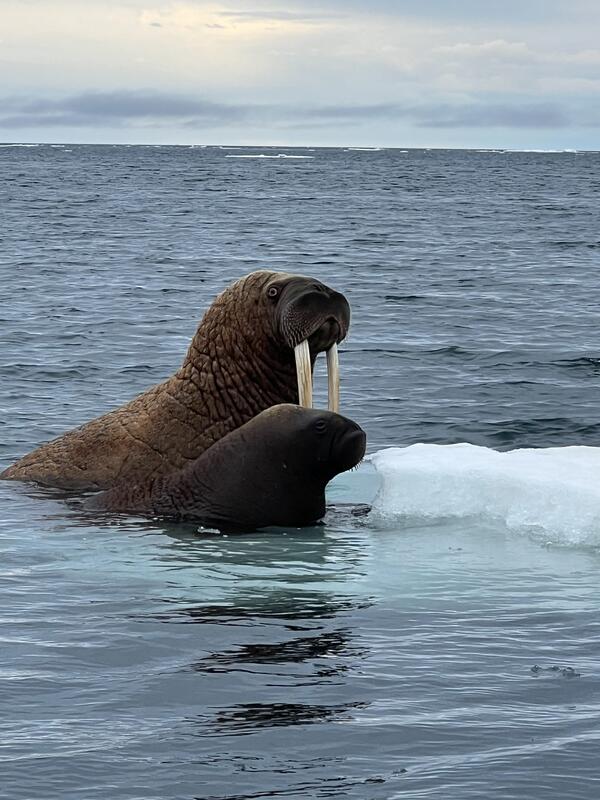
Adult female walrus and one-year old young
An adult female walrus with a one-year old offspring. USGS and the U.S.
An adult female walrus with a one-year old offspring. USGS and the U.S.

Avocets flying above Farmington Bay Wildlife Management Area, Utah
Avocets flying above Farmington Bay Wildlife Management Area, UtahThe Saline Lake Ecosystems IWAA Waterbird Movement Project began tagging American Avocets in March 2023 to track their movements across the landscape. Tracking data from these birds will help scientists better understand why these birds choose to use the terminal lake and wetland habitats they do in the Great Basin.
By
Ecosystems Mission Area, Water Resources Mission Area, Species Management Research Program, Water Resources Research Act Program, Forest and Rangeland Ecosystem Science Center, Fort Collins Science Center, Nevada Water Science Center, Oregon Water Science Center, Utah Water Science Center, Western Ecological Research Center (WERC), Saline Lake Ecosystems Integrated Water Availability Assessment
Avocets flying above Farmington Bay Wildlife Management Area, Utah
Avocets flying above Farmington Bay Wildlife Management Area, UtahThe Saline Lake Ecosystems IWAA Waterbird Movement Project began tagging American Avocets in March 2023 to track their movements across the landscape. Tracking data from these birds will help scientists better understand why these birds choose to use the terminal lake and wetland habitats they do in the Great Basin.
By
Ecosystems Mission Area, Water Resources Mission Area, Species Management Research Program, Water Resources Research Act Program, Forest and Rangeland Ecosystem Science Center, Fort Collins Science Center, Nevada Water Science Center, Oregon Water Science Center, Utah Water Science Center, Western Ecological Research Center (WERC), Saline Lake Ecosystems Integrated Water Availability Assessment

Walking the shallows of Lake Abert, Oregon
Lake Abert, Oregon is one of the 20 terminal lakes identified by USGS partners as priority ecosystems for study by the Saline Lakes Ecosystems IWAA.
By
Ecosystems Mission Area, Water Resources Mission Area, Species Management Research Program, Water Availability and Use Science Program, Forest and Rangeland Ecosystem Science Center, Fort Collins Science Center, Nevada Water Science Center, Oregon Water Science Center, Utah Water Science Center, Western Ecological Research Center (WERC), Saline Lake Ecosystems Integrated Water Availability Assessment
Lake Abert, Oregon is one of the 20 terminal lakes identified by USGS partners as priority ecosystems for study by the Saline Lakes Ecosystems IWAA.
By
Ecosystems Mission Area, Water Resources Mission Area, Species Management Research Program, Water Availability and Use Science Program, Forest and Rangeland Ecosystem Science Center, Fort Collins Science Center, Nevada Water Science Center, Oregon Water Science Center, Utah Water Science Center, Western Ecological Research Center (WERC), Saline Lake Ecosystems Integrated Water Availability Assessment
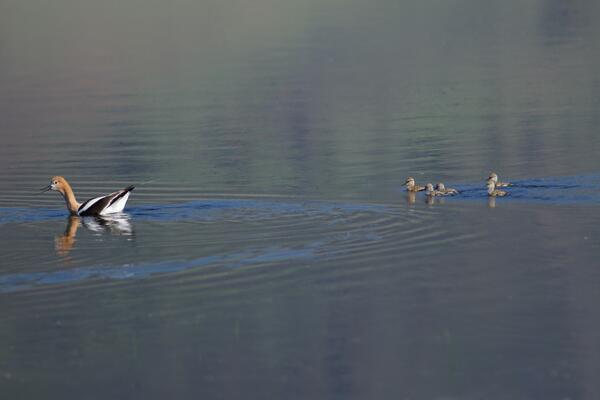
American Avocet trailed by chicks
American Avocet are a bird that relies heavily on the Saline Lakes ecosystem during their spring migration periods. Over 50% of these birds exist here. Part of their use includes using the terminal lakes there to breed.
By
Ecosystems Mission Area, Water Resources Mission Area, Species Management Research Program, Forest and Rangeland Ecosystem Science Center, Fort Collins Science Center, Nevada Water Science Center, Oregon Water Science Center, Utah Water Science Center, Western Ecological Research Center (WERC), Saline Lake Ecosystems Integrated Water Availability Assessment
American Avocet are a bird that relies heavily on the Saline Lakes ecosystem during their spring migration periods. Over 50% of these birds exist here. Part of their use includes using the terminal lakes there to breed.
By
Ecosystems Mission Area, Water Resources Mission Area, Species Management Research Program, Forest and Rangeland Ecosystem Science Center, Fort Collins Science Center, Nevada Water Science Center, Oregon Water Science Center, Utah Water Science Center, Western Ecological Research Center (WERC), Saline Lake Ecosystems Integrated Water Availability Assessment

Kaili Gregory Pottery A few of the pottery mug with northwestern and southwestern pond turtle at the bottom
Kaili Gregory Pottery A few of the pottery mug with northwestern and southwestern pond turtle at the bottomPottery by Kaili Gregory, Georgia and Florida Cooperative Fish and Wildlife Research Units. Western pond turtles were recently split into two species the southwestern pond turtle and the northwestern pond turtles. Both species have exhibited substantial population declines and range contractions in recent decades.
Kaili Gregory Pottery A few of the pottery mug with northwestern and southwestern pond turtle at the bottom
Kaili Gregory Pottery A few of the pottery mug with northwestern and southwestern pond turtle at the bottomPottery by Kaili Gregory, Georgia and Florida Cooperative Fish and Wildlife Research Units. Western pond turtles were recently split into two species the southwestern pond turtle and the northwestern pond turtles. Both species have exhibited substantial population declines and range contractions in recent decades.
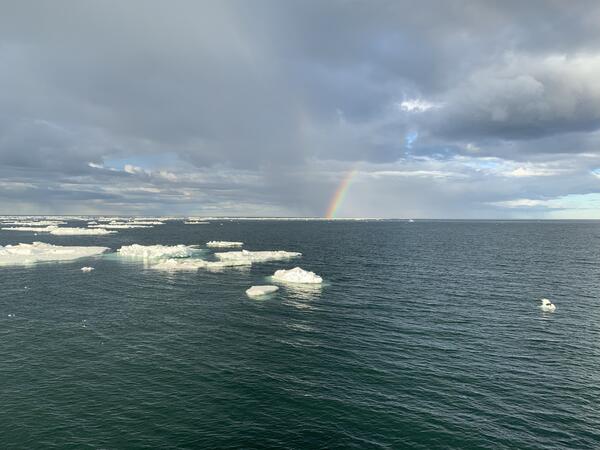
Arctic rainbow over sea ice in the Chukchi Sea
A rainbow emerges from an evening shower in the Chukchi Sea. USGS and the U.S.
A rainbow emerges from an evening shower in the Chukchi Sea. USGS and the U.S.

An orange tributary mixing into the pristine Kugururok River
An orange tributary mixing into the pristine Kugururok RiverOrange streams are increasingly common in the Brooks Range of northern Alaska. The orange stream color reflects oxidized iron, but also often indicates elevated heavy metal concentrations. Our ongoing study aims to document these occurrences and the timing of their onset.
An orange tributary mixing into the pristine Kugururok River
An orange tributary mixing into the pristine Kugururok RiverOrange streams are increasingly common in the Brooks Range of northern Alaska. The orange stream color reflects oxidized iron, but also often indicates elevated heavy metal concentrations. Our ongoing study aims to document these occurrences and the timing of their onset.

Orange water from a tributary of the Kugururok River
Orange water from a tributary of the Kugururok RiverOrange streams are increasingly common in the Brooks Range of northern Alaska. The orange stream color reflects oxidized iron, but also often indicates elevated heavy metal concentrations. Our ongoing study aims to document these occurrences and the timing of their onset.
Orange water from a tributary of the Kugururok River
Orange water from a tributary of the Kugururok RiverOrange streams are increasingly common in the Brooks Range of northern Alaska. The orange stream color reflects oxidized iron, but also often indicates elevated heavy metal concentrations. Our ongoing study aims to document these occurrences and the timing of their onset.

Limited mixing of orange water and the Kugururok River
Limited mixing of orange water and the Kugururok RiverOrange streams are increasingly common in the Brooks Range of northern Alaska. The orange stream color reflects oxidized iron, but also often indicates elevated heavy metal concentrations. Our ongoing study aims to document these occurrences and the timing of their onset.
Limited mixing of orange water and the Kugururok River
Limited mixing of orange water and the Kugururok RiverOrange streams are increasingly common in the Brooks Range of northern Alaska. The orange stream color reflects oxidized iron, but also often indicates elevated heavy metal concentrations. Our ongoing study aims to document these occurrences and the timing of their onset.

Waiting on the wing
A large quadcopter drone rests on the tailgate of a truck waiting to fly with hyperspectral imagery to estimate vegetation cover.
A large quadcopter drone rests on the tailgate of a truck waiting to fly with hyperspectral imagery to estimate vegetation cover.

Drone ready to fly
A quadcopter drone rests on the orange landing pad, ready to fly over Rapid and Other Methods for Assessment and Monitoring (ROAM) plots to collect data that will be used to generate cover and density estimates.
A quadcopter drone rests on the orange landing pad, ready to fly over Rapid and Other Methods for Assessment and Monitoring (ROAM) plots to collect data that will be used to generate cover and density estimates.

Smallmouth Bass
Smallmouth Bass are good indicators of methylmercury exposure to humans and wildlife because they are a common, popular sport fish and eat a variety of food during their lifetime. Juvenile Smallmouth Bass – smaller than 150mm in length - eat zooplankton, or microscopic animals.
Smallmouth Bass are good indicators of methylmercury exposure to humans and wildlife because they are a common, popular sport fish and eat a variety of food during their lifetime. Juvenile Smallmouth Bass – smaller than 150mm in length - eat zooplankton, or microscopic animals.
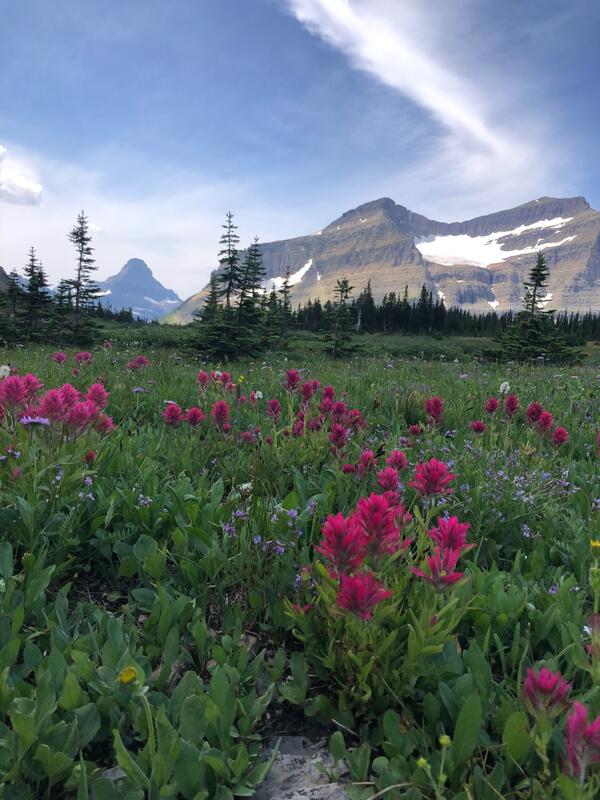
Glacier National Park
A picture of Glacier National Park with native plants, including Indian paintbrushes in the foreground, confiders in the midground, and snowy mountains in the background. Photo by Linsday Dose, USGS contractor.
A picture of Glacier National Park with native plants, including Indian paintbrushes in the foreground, confiders in the midground, and snowy mountains in the background. Photo by Linsday Dose, USGS contractor.
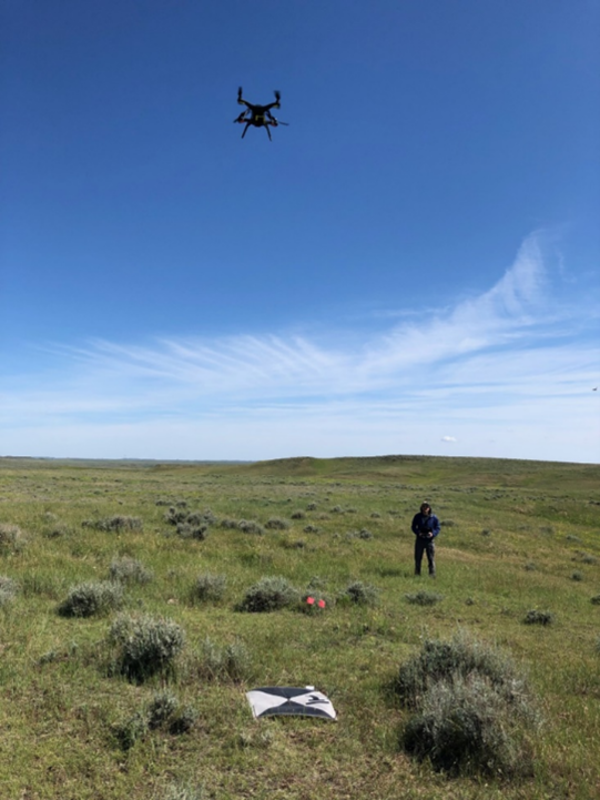
Researcher collecting data with unmanned aerial vehicle (drone)
Researcher collecting data with unmanned aerial vehicle (drone)USGS researchers acquire imagery from unmanned aerial vehicles (drones) synchronous with high-resolution imagery from satellites to map sagebrush across North Dakota and South Dakota.
Researcher collecting data with unmanned aerial vehicle (drone)
Researcher collecting data with unmanned aerial vehicle (drone)USGS researchers acquire imagery from unmanned aerial vehicles (drones) synchronous with high-resolution imagery from satellites to map sagebrush across North Dakota and South Dakota.

Lepidoptera Research Collection Specimens
Specimens from a USGS Lepidoptera Research Collection stored at the Kansas WSC Organic Geochemistry Reseearch Laboratory. Specimens are received as part of a Citizen Science effort to establish a collection to further insect research.
Specimens from a USGS Lepidoptera Research Collection stored at the Kansas WSC Organic Geochemistry Reseearch Laboratory. Specimens are received as part of a Citizen Science effort to establish a collection to further insect research.

How Climate Change Affects the Life Cycle of Monarch Butterflies
How Climate Change Affects the Life Cycle of Monarch ButterfliesDrawing showing climate change impacts to each life cycle stage of monarchs: 1) Butterflies lay fewer eggs in wetter conditions, 2) Warmer temperatures reduce milkweed growth, leaving caterpillars hungry, 3) Erratic winters freeze overwintering pupae, 4) Shifting seasons disrupt migrations.
How Climate Change Affects the Life Cycle of Monarch Butterflies
How Climate Change Affects the Life Cycle of Monarch ButterfliesDrawing showing climate change impacts to each life cycle stage of monarchs: 1) Butterflies lay fewer eggs in wetter conditions, 2) Warmer temperatures reduce milkweed growth, leaving caterpillars hungry, 3) Erratic winters freeze overwintering pupae, 4) Shifting seasons disrupt migrations.