An official website of the United States government
Here's how you know
Official websites use .gov
A .gov website belongs to an official government organization in the United States.
Secure .gov websites use HTTPS
A lock () or https:// means you’ve safely connected to the .gov website. Share sensitive information only on official, secure websites.
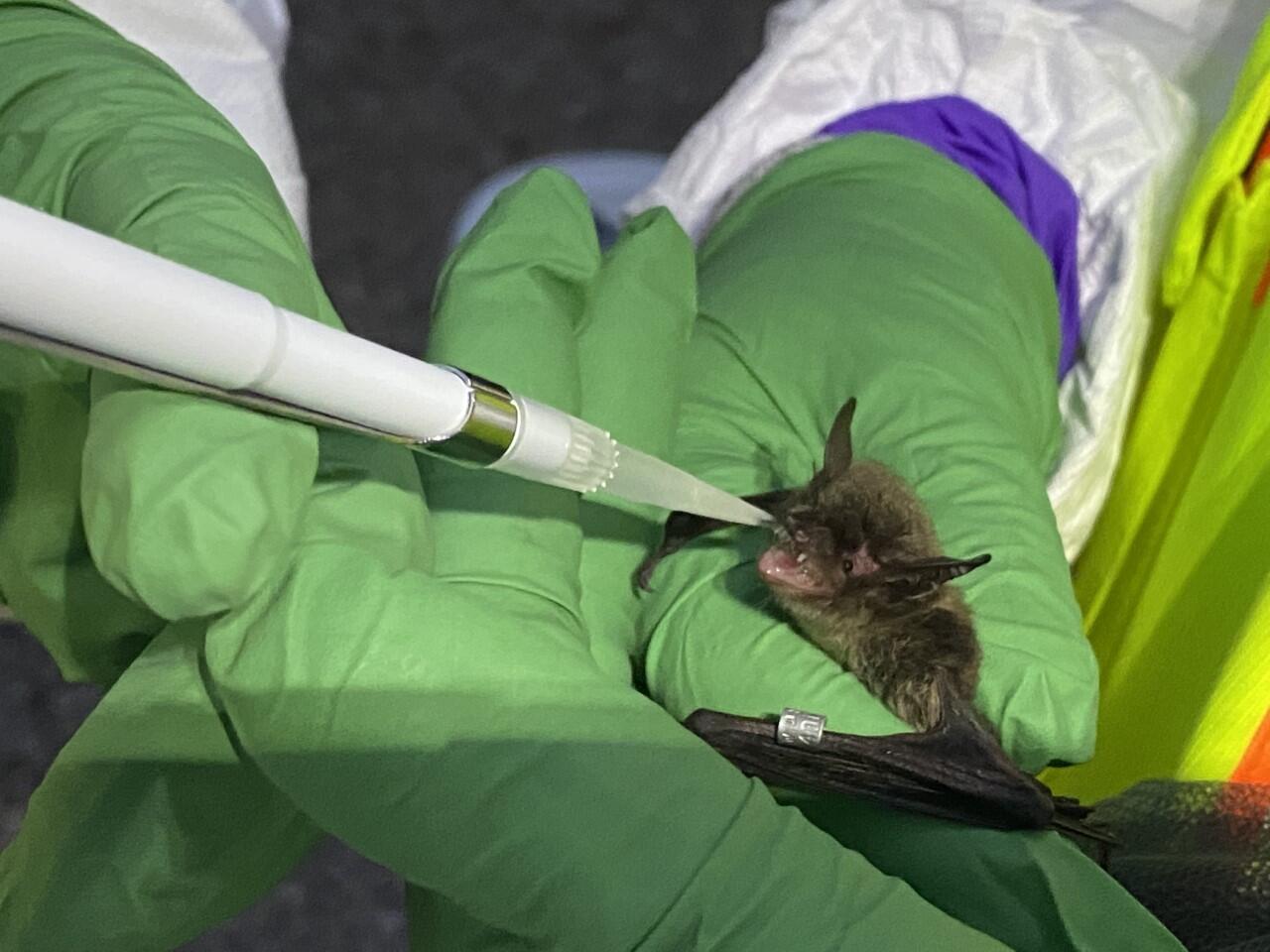
The USGS has been a leading contributor to the interagency response to white-nose syndrome since 2008, when millions of bats died from this devastating disease.
The health of animals, humans, and the environment are closely connected. The effects of diseases, pathogens, contaminants, and toxins are global and profound, often resulting in economic and agricultural impacts, declines in wildlife populations, and ecological disturbance. The USGS works to advance wildlife health science for the benefit of animals, humans, and the environment.
The cyanobacteria Gleotrichia shown under a microscope from a water sample collected at Ek Lake Trail, a popular recreational area in Kabetogama Lake where algal blooms frequently occur. Gleotrichia can produce microcystin.
Viruses, bacteria, fungi, and parasites are a normal part of any ecosystem. But viruses, along with some bacteria, fungi, and parasites, can also be pathogens, meaning they cause disease in humans, plants, and wildlife. The fungus Pseudogymnoascus destructans causes the deadly white-nose syndrome in hibernating bats. A tiny protein particle known as a prion causes the fatal brain disease Chronic Wasting Disease in deer. The H5N1 virus causes avian influenza in birds. These diseases can devastate wildlife populations and have serious conservation and management consequences. The health of people is also connected to the health of wildlife and our shared environment. Some diseases, known as zoonotic diseases, can jump from animals to humans. According to the Centers for Disease Control and Prevention, 60% of known infectious diseases in people can be spread from animals, and three out of every four new or emerging infectious diseases in people come from animals. Other diseases can jump from wild animals to domestic animals.
USGS is a leader in wildlife disease research and surveillance. The USGS monitors the presence of pathogens and diseases in animals and the environment, develops tools for their detection, identifies whether environmental factors influence their spread, and studies the health risks that they pose. Our scientists are at the table with public and animal health agencies as they tackle diseases that affect mammals, fish, reptiles, and more, developing advanced tools for diagnosis, surveillance, risk assessment, and control.
Contaminants and Toxins
Contaminants and toxins represent another potential threat to the health of humans and wildlife, and in their shared environment. People use chemical-based products every day, and these chemicals enter the environment from treated wastewater, industrial processes, runoff from urban and agricultural land surfaces, and more. Pesticides, pharmaceuticals, and per-and polyfluoroalkyl substances (PFAS) are just a few examples of the many contaminants that make their way into our Nation’s waterways each day. Contaminants may be found at high levels and cause immediate effects or occur lower levels and only cause problems after long-term exposure, and sometimes the chemicals are at low enough levels that they do not by themselves create a health risk.
The environment also contains natural toxins. For example, algal blooms often contain cyanobacteria and other microorganisms which can produce natural toxins that harm people, pets, and wildlife when they occur at high enough levels in water resources used for recreation and drinking water. Harmful algal blooms (HABs) occur when environmental conditions are favorable, such as when water temperatures are unusually warm, but human activities can also contribute to their occurrence, for example when fertilizers used on lawns and crops run off into waterways.
Supporting the Health of Our Wildlife, Lands, and Waters
The USGS is a leader in developing research solutions to address the deadliest wildlife diseases, detect pathogens in the environment, and monitor for the presence of dangerous chemicals and toxins.
USGS science focuses on quickly detecting, characterizing, and responding to potential hazards and biological threats, including infectious diseases like chronic wasting disease and avian influenza and other pathogens like waterborne bacteria.
The USGS is leading efforts to predict and forecast the risk of biological threats like infectious diseases and to ensure that these risks are detected early. This information helps federal, and state natural resource managers and public health professionals prepare for and respond to these threats. The USGS is developing a nationwide biosurveillance network to address ongoing and emerging needs through projects that improve threat detection, interagency communication, and early detection and rapid response decision making. Explore these activities below.
Environmental DNA (eDNA), or DNA that is released from an organism into the environment, can allow for rapid, cost-effective data collection on the distribution and abundance of a species. It can also be used to understand the distribution and prevalence of pathogens on land or in water.
USGS scientists are using eDNA to sample water inhabited by amphibians for the presence of Batrachochytrium dendrobatidis, a chytrid fungus that causes disease in amphibians and has been attributed to population declines of at least 200 species worldwide.
USGS scientists tested a new approach for sampling eDNA of organisms in water that are not very abundant – something akin to finding a needle in a haystack. A robot was installed at a streamgage in Idaho, and proved to be an effective and efficient method of collecting eDNA that could help efforts to identify invasive species and pathogens.
Following multiple unprecedented die-offs of mountain whitefish and trout in the Yellowstone River in 2016 and 2017, USGS scientists developed a new early detection eDNA method for the parasite Tetracapsuloides bryosalmonae, which causes proliferative kidney disease in fish.
Investigating Exposure to Lethal Threats
Sometimes, the effects of biological threats are immediate and abrupt, such as the sudden and sharp decline of a population, an event known as a “die-off”. In other cases, impacts are felt over time, such as when small amounts of a contaminant build up in the tissues of organisms and can cause long-term effects on plant, animal, and even human health. USGS scientists work in collaboration with partner agencies to investigate the exposure of plants and animals to lethal diseases, pathogens, contaminants, and the impacts of these threats on species.
In the summer of 2019, dozens of Arctic terns were found dead at a nesting colony near Juneau, Alaska. Three years later, USGS scientists identified the culprit – a potent neurotoxin produced by harmful algae.
USGS scientists investigated the role of the deadly amphibian disease severe Perkinsea infections (SPI) in large-scale frog die-offs from 1999-2015. They found that the disease cause 21 frog mass mortalities in 10 states, killing up to 95% of tadpoles in affected populations.
In national parks across the country, citizen scientists and researchers are working together to monitor mercury in dragonflies. Dragonfly larvae provide an indicator of the levels of mercury pollution within the broader ecosystem.
The U.S. Fish and Wildlife Service National Elk Refuge (NER) in Jackson, Wyoming, supplementally feeds Cervus elaphus canadensis (elk) and Bison bison (American bison) during winter months, but the costs and benefits of this management strategy are being reevaluated considering the potential effects of chronic wasting disease (CWD) on elk. U.S. Geological Survey scientists worked with...
A decade after a marine epidemic killed off sea stars and triggered ecosystem-wide effects along the Pacific Coast of North America, researchers have identified the bacterial pathogen that is responsible for sea star wasting disease.
Rapid warming could drastically alter host–parasite relationships, which is especially important for fisheries crucial to human nutrition and economic livelihoods, yet we lack a synthetic understanding of how warming influences parasite-induced mortality in these systems. We conducted a meta-analysis using 266 effect sizes from 52 empirical papers on harvested aquatic species and...
Authors
M. M. Tomamichel, K. I. Lowe, K. M.H. Arnold, M. E. Frischer, Brian J. Irwin, C. W. Osenberg, R. J. Hall, J. E. Byers
Victoria G. Christensen, Christopher J. Crawford, Robert J. Dusek, Michael J. Focazio, Lisa Reynolds Fogarty, Jennifer L. Graham, Celeste A. Journey, Mari E. Lee, James H. Larson, Sarah M. Stackpoole, Viviana Mazzei, Emily Pindilli, Barnett A. Rattner, E. Terrence Slonecker, Kristen B. McSwain, Timothy J. Reilly, Ashley E. Lopez
The Research Triangle area, located within the upper Cape Fear and Neuse River basins, is one of the most rapidly developing areas in the Nation. Growth has increased demand for water from public suppliers, the majority of which draw water from streams and lakes in the region. Growth also brings the threat of greater loads of contaminants and new contaminant sources that, if not properly managed...
The Research Triangle area, located within the upper Cape Fear and Neuse River basins, is one of the most rapidly developing areas in the Nation. Growth has increased demand for water from public suppliers, the majority of which draw water from streams and lakes in the region. Growth also brings the threat of greater loads of contaminants and new contaminant sources that, if not properly managed...
The USGS National Wildlife Health Center, Montana Cooperative Wildlife Research Unit, Ventana Systems, Inc., and the Wisconsin Department of Natural Resources (WIDNR) are applying a systems approach to map and model the complex relationships among ecological, epidemiological, social, and political processes affecting CWD. Through a participatory modeling process, we gathered subject matter...
Application of a systems approach for management of chronic wasting disease
The USGS National Wildlife Health Center, Montana Cooperative Wildlife Research Unit, Ventana Systems, Inc., and the Wisconsin Department of Natural Resources (WIDNR) are applying a systems approach to map and model the complex relationships among ecological, epidemiological, social, and political processes affecting CWD. Through a participatory modeling process, we gathered subject matter...
Elevated ocean temperatures are linked to the development of harmful algal blooms (HABs). Toxins from these blooms may pose health threats to marine organisms, including seabirds. Since 2015, the USGS has worked with a variety of stakeholders to develop testing methods and research projects to better understand the geographic extent, timing and impacts of algal toxins in Alaska marine ecosystems...
Elevated ocean temperatures are linked to the development of harmful algal blooms (HABs). Toxins from these blooms may pose health threats to marine organisms, including seabirds. Since 2015, the USGS has worked with a variety of stakeholders to develop testing methods and research projects to better understand the geographic extent, timing and impacts of algal toxins in Alaska marine ecosystems...
USGS Laboratory for the Analysis of Per- and Polyfluoroalkyl Substances (PFAS)
The U.S. Geological Survey laboratory for the analysis of per- and polyfluoroalkyl substances (PFAS) uses cutting-edge techniques to analyze environmental samples including tissues, plasma, water, and soils to undertake and support research projects across the country.
The U.S. Geological Survey laboratory for the analysis of per- and polyfluoroalkyl substances (PFAS) uses cutting-edge techniques to analyze environmental samples including tissues, plasma, water, and soils to undertake and support research projects across the country.
USGS volunteer Liliana uses a syringe to draw an eDNA sample from a rock pool along the Puka Stream. The eDNA sampled by USGS field crews informs research on invasive mosquito population dynamics.
USGS volunteer Liliana uses a syringe to draw an eDNA sample from a rock pool along the Puka Stream. The eDNA sampled by USGS field crews informs research on invasive mosquito population dynamics.
Scientist wades in wetland while filtering for infectious avian influenza in Minnesota
Field assistant Kathryn Johncock wades in a wetland while filtering for infectious avian influenza virus at the Roseau River Wildlife Management Area, Roseau, Minnesota.
Field assistant Kathryn Johncock wades in a wetland while filtering for infectious avian influenza virus at the Roseau River Wildlife Management Area, Roseau, Minnesota.
Many factors including habitat destruction, invasive plants, non-native predators and competitors, and introduced diseases have decimated the diverse, endemic native forest bird community of Hawai‘i. In particular, avian malaria ( Plasmodium relictum), which is transmitted by the introduced southern house mosquito ( Culex quinquefasciatus), has caused dramatic declines and extinctions in many...
Many factors including habitat destruction, invasive plants, non-native predators and competitors, and introduced diseases have decimated the diverse, endemic native forest bird community of Hawai‘i. In particular, avian malaria ( Plasmodium relictum), which is transmitted by the introduced southern house mosquito ( Culex quinquefasciatus), has caused dramatic declines and extinctions in many...
As SARS-CoV-2, the virus that causes COVID-19 in humans, continues to spread globally, questions have emerged about the potential for humans to transmit the virus to North American wildlife, its potential effects on native wildlife populations, and the resultant possibility and consequences of establishing a persistent wildlife reservoir. Recent studies have detected SARS-CoV-2 in escaped or wild...
As SARS-CoV-2, the virus that causes COVID-19 in humans, continues to spread globally, questions have emerged about the potential for humans to transmit the virus to North American wildlife, its potential effects on native wildlife populations, and the resultant possibility and consequences of establishing a persistent wildlife reservoir. Recent studies have detected SARS-CoV-2 in escaped or wild...
The Eastern Ecological Science Center is working closely with federal, state, and tribal partners to help inform decisions that reduce the risk of SARS-CoV-2 transmission from humans to North American wildlife, including bats.
Decision Science Support for SARS-CoV-2 Risk to North American Bats
The Eastern Ecological Science Center is working closely with federal, state, and tribal partners to help inform decisions that reduce the risk of SARS-CoV-2 transmission from humans to North American wildlife, including bats.
U.S. Geological Survey scientists and their partners utilize laboratory and field studies and existing information to improve understanding of anticoagulant rodenticide exposure and effects to wild birds.
Scientists Provide an Understanding of Anticoagulant Rodenticide Exposure in Non-Target Bird Species
U.S. Geological Survey scientists and their partners utilize laboratory and field studies and existing information to improve understanding of anticoagulant rodenticide exposure and effects to wild birds.
Mercury (Hg) is a contaminant of significant concern in the San Francisco Bay-Delta estuary and watershed (Bay-Delta). The formation, fate, and transport of methylmercury (MeHg), a particularly toxic organic form of Hg that readily bioaccumulates in wildlife, has been studied extensively throughout the system. However, there is widespread recognition of the need for more comprehensive monitoring...
High Resolution Temporal and Spatial Mapping of Mercury and Methylmercury in Surface Waters of the Sacramento – San Joaquin Delta
Mercury (Hg) is a contaminant of significant concern in the San Francisco Bay-Delta estuary and watershed (Bay-Delta). The formation, fate, and transport of methylmercury (MeHg), a particularly toxic organic form of Hg that readily bioaccumulates in wildlife, has been studied extensively throughout the system. However, there is widespread recognition of the need for more comprehensive monitoring...
ʻŌhiʻa ( Metrosideros polymorpha) is the dominant tree in Hawaiian forests, but Rapid ʻŌhiʻa Death (ROD), a newly emerging disease that stands to cause high mortality of this ecologically important tree, may lead to invasions by exotic plants as gaps open in the forest. To better understand if planting of ʻōhiʻa seedlings can be used as a restoration tool, we investigated the survival of ʻōhiʻa...
Building Resilience to Invasive Species in ʻŌhiʻa Forests
ʻŌhiʻa ( Metrosideros polymorpha) is the dominant tree in Hawaiian forests, but Rapid ʻŌhiʻa Death (ROD), a newly emerging disease that stands to cause high mortality of this ecologically important tree, may lead to invasions by exotic plants as gaps open in the forest. To better understand if planting of ʻōhiʻa seedlings can be used as a restoration tool, we investigated the survival of ʻōhiʻa...
Cyanobacterial bloom magnitude during 2003–11 was quantified and ranked in Florida and Ohio lakes with a newly developed modelling tool that allows for the use of multiple satellite data sources and user-defined thresholds. This tool was designed to identify the magnitude of algal blooms, but one metric alone cannot adequately represent the severity of a bloom of interest in terms of toxicity. The...
Satellite Data Used to Estimate and Rank Cyanobacterial Bloom Magnitude in Florida and Ohio Lakes—Developing Tools to Protect Human and Wildlife Health from Cyanotoxin Exposure
Cyanobacterial bloom magnitude during 2003–11 was quantified and ranked in Florida and Ohio lakes with a newly developed modelling tool that allows for the use of multiple satellite data sources and user-defined thresholds. This tool was designed to identify the magnitude of algal blooms, but one metric alone cannot adequately represent the severity of a bloom of interest in terms of toxicity. The...
Cyanobacteria with toxin-producing potential, genes indicating an ability for toxin synthesis, or cyanotoxins were present before and after formation of a visible algal bloom in Kabetogama Lake, a popular recreation area in Voyageurs National Park that lies along the border of Minnesota and Canada. The temporal patterns observed in this study indicate that sampling only when there is a visible...
Mixtures of Algal Toxins Present Prior to and After Formation of Visible Algal Blooms—Science to Inform the Timing of Algal Toxin Exposure
Cyanobacteria with toxin-producing potential, genes indicating an ability for toxin synthesis, or cyanotoxins were present before and after formation of a visible algal bloom in Kabetogama Lake, a popular recreation area in Voyageurs National Park that lies along the border of Minnesota and Canada. The temporal patterns observed in this study indicate that sampling only when there is a visible...
Harmful algal blooms (HABs) have the potential to harm fish and wildlife, domestic animals, livestock, and humans through toxin production or ecological disturbances such as oxygen depletion and blockage of sunlight.
Harmful algal blooms (HABs) have the potential to harm fish and wildlife, domestic animals, livestock, and humans through toxin production or ecological disturbances such as oxygen depletion and blockage of sunlight.
Avian influenza is a viral disease caused by various strains of avian influenza viruses that can be classified as low pathogenic avian influenza (LPAI) or highly pathogenic avian influenza (HPAI). It remains a global disease with potential high consequence with the potential to threaten wildlife, agriculture, and human health.
Avian influenza is a viral disease caused by various strains of avian influenza viruses that can be classified as low pathogenic avian influenza (LPAI) or highly pathogenic avian influenza (HPAI). It remains a global disease with potential high consequence with the potential to threaten wildlife, agriculture, and human health.
Pesticides are used in both agricultural and urban settings to manage unwanted plants, insects, fungi, and other pests. However, these substances and their breakdown products can move beyond their intended application sites through various means, ending up in areas where they weren't meant to be. This movement can happen via the air, through water (both surface and groundwater), and by sticking to...
Pesticides are used in both agricultural and urban settings to manage unwanted plants, insects, fungi, and other pests. However, these substances and their breakdown products can move beyond their intended application sites through various means, ending up in areas where they weren't meant to be. This movement can happen via the air, through water (both surface and groundwater), and by sticking to...
Avian influenza outbreaks can result in significant economic loss, as in 2014-2015 when the Congressional Research Service estimated losses of $3.3 billion dollars from the death and culling of domestic poultry due to an outbreak of this disease. Patuxent’s avian influenza research seeks to answer such questions as “How far can a bird carrying this virus travel?” and “What influences the...
Avian influenza outbreaks can result in significant economic loss, as in 2014-2015 when the Congressional Research Service estimated losses of $3.3 billion dollars from the death and culling of domestic poultry due to an outbreak of this disease. Patuxent’s avian influenza research seeks to answer such questions as “How far can a bird carrying this virus travel?” and “What influences the...
New Video on USGS Investigation of Coral Disease in Hawaiʻi
A new video, “Exploring Causes of Coral Disease,” follows USGS researchers as they investigate potential causes of black band disease affecting corals...
The FAQs below are a sample of USGS science on disease and contaminants and do not represent a complete list.
The health of animals, humans, and the environment are closely connected. The effects of diseases, pathogens, contaminants, and toxins are global and profound, often resulting in economic and agricultural impacts, declines in wildlife populations, and ecological disturbance. The USGS works to advance wildlife health science for the benefit of animals, humans, and the environment.
The cyanobacteria Gleotrichia shown under a microscope from a water sample collected at Ek Lake Trail, a popular recreational area in Kabetogama Lake where algal blooms frequently occur. Gleotrichia can produce microcystin.
Viruses, bacteria, fungi, and parasites are a normal part of any ecosystem. But viruses, along with some bacteria, fungi, and parasites, can also be pathogens, meaning they cause disease in humans, plants, and wildlife. The fungus Pseudogymnoascus destructans causes the deadly white-nose syndrome in hibernating bats. A tiny protein particle known as a prion causes the fatal brain disease Chronic Wasting Disease in deer. The H5N1 virus causes avian influenza in birds. These diseases can devastate wildlife populations and have serious conservation and management consequences. The health of people is also connected to the health of wildlife and our shared environment. Some diseases, known as zoonotic diseases, can jump from animals to humans. According to the Centers for Disease Control and Prevention, 60% of known infectious diseases in people can be spread from animals, and three out of every four new or emerging infectious diseases in people come from animals. Other diseases can jump from wild animals to domestic animals.
USGS is a leader in wildlife disease research and surveillance. The USGS monitors the presence of pathogens and diseases in animals and the environment, develops tools for their detection, identifies whether environmental factors influence their spread, and studies the health risks that they pose. Our scientists are at the table with public and animal health agencies as they tackle diseases that affect mammals, fish, reptiles, and more, developing advanced tools for diagnosis, surveillance, risk assessment, and control.
Contaminants and Toxins
Contaminants and toxins represent another potential threat to the health of humans and wildlife, and in their shared environment. People use chemical-based products every day, and these chemicals enter the environment from treated wastewater, industrial processes, runoff from urban and agricultural land surfaces, and more. Pesticides, pharmaceuticals, and per-and polyfluoroalkyl substances (PFAS) are just a few examples of the many contaminants that make their way into our Nation’s waterways each day. Contaminants may be found at high levels and cause immediate effects or occur lower levels and only cause problems after long-term exposure, and sometimes the chemicals are at low enough levels that they do not by themselves create a health risk.
The environment also contains natural toxins. For example, algal blooms often contain cyanobacteria and other microorganisms which can produce natural toxins that harm people, pets, and wildlife when they occur at high enough levels in water resources used for recreation and drinking water. Harmful algal blooms (HABs) occur when environmental conditions are favorable, such as when water temperatures are unusually warm, but human activities can also contribute to their occurrence, for example when fertilizers used on lawns and crops run off into waterways.
Supporting the Health of Our Wildlife, Lands, and Waters
The USGS is a leader in developing research solutions to address the deadliest wildlife diseases, detect pathogens in the environment, and monitor for the presence of dangerous chemicals and toxins.
USGS science focuses on quickly detecting, characterizing, and responding to potential hazards and biological threats, including infectious diseases like chronic wasting disease and avian influenza and other pathogens like waterborne bacteria.
The USGS is leading efforts to predict and forecast the risk of biological threats like infectious diseases and to ensure that these risks are detected early. This information helps federal, and state natural resource managers and public health professionals prepare for and respond to these threats. The USGS is developing a nationwide biosurveillance network to address ongoing and emerging needs through projects that improve threat detection, interagency communication, and early detection and rapid response decision making. Explore these activities below.
Environmental DNA (eDNA), or DNA that is released from an organism into the environment, can allow for rapid, cost-effective data collection on the distribution and abundance of a species. It can also be used to understand the distribution and prevalence of pathogens on land or in water.
USGS scientists are using eDNA to sample water inhabited by amphibians for the presence of Batrachochytrium dendrobatidis, a chytrid fungus that causes disease in amphibians and has been attributed to population declines of at least 200 species worldwide.
USGS scientists tested a new approach for sampling eDNA of organisms in water that are not very abundant – something akin to finding a needle in a haystack. A robot was installed at a streamgage in Idaho, and proved to be an effective and efficient method of collecting eDNA that could help efforts to identify invasive species and pathogens.
Following multiple unprecedented die-offs of mountain whitefish and trout in the Yellowstone River in 2016 and 2017, USGS scientists developed a new early detection eDNA method for the parasite Tetracapsuloides bryosalmonae, which causes proliferative kidney disease in fish.
Investigating Exposure to Lethal Threats
Sometimes, the effects of biological threats are immediate and abrupt, such as the sudden and sharp decline of a population, an event known as a “die-off”. In other cases, impacts are felt over time, such as when small amounts of a contaminant build up in the tissues of organisms and can cause long-term effects on plant, animal, and even human health. USGS scientists work in collaboration with partner agencies to investigate the exposure of plants and animals to lethal diseases, pathogens, contaminants, and the impacts of these threats on species.
In the summer of 2019, dozens of Arctic terns were found dead at a nesting colony near Juneau, Alaska. Three years later, USGS scientists identified the culprit – a potent neurotoxin produced by harmful algae.
USGS scientists investigated the role of the deadly amphibian disease severe Perkinsea infections (SPI) in large-scale frog die-offs from 1999-2015. They found that the disease cause 21 frog mass mortalities in 10 states, killing up to 95% of tadpoles in affected populations.
In national parks across the country, citizen scientists and researchers are working together to monitor mercury in dragonflies. Dragonfly larvae provide an indicator of the levels of mercury pollution within the broader ecosystem.
The U.S. Fish and Wildlife Service National Elk Refuge (NER) in Jackson, Wyoming, supplementally feeds Cervus elaphus canadensis (elk) and Bison bison (American bison) during winter months, but the costs and benefits of this management strategy are being reevaluated considering the potential effects of chronic wasting disease (CWD) on elk. U.S. Geological Survey scientists worked with...
A decade after a marine epidemic killed off sea stars and triggered ecosystem-wide effects along the Pacific Coast of North America, researchers have identified the bacterial pathogen that is responsible for sea star wasting disease.
Rapid warming could drastically alter host–parasite relationships, which is especially important for fisheries crucial to human nutrition and economic livelihoods, yet we lack a synthetic understanding of how warming influences parasite-induced mortality in these systems. We conducted a meta-analysis using 266 effect sizes from 52 empirical papers on harvested aquatic species and...
Authors
M. M. Tomamichel, K. I. Lowe, K. M.H. Arnold, M. E. Frischer, Brian J. Irwin, C. W. Osenberg, R. J. Hall, J. E. Byers
Victoria G. Christensen, Christopher J. Crawford, Robert J. Dusek, Michael J. Focazio, Lisa Reynolds Fogarty, Jennifer L. Graham, Celeste A. Journey, Mari E. Lee, James H. Larson, Sarah M. Stackpoole, Viviana Mazzei, Emily Pindilli, Barnett A. Rattner, E. Terrence Slonecker, Kristen B. McSwain, Timothy J. Reilly, Ashley E. Lopez
The Research Triangle area, located within the upper Cape Fear and Neuse River basins, is one of the most rapidly developing areas in the Nation. Growth has increased demand for water from public suppliers, the majority of which draw water from streams and lakes in the region. Growth also brings the threat of greater loads of contaminants and new contaminant sources that, if not properly managed...
The Research Triangle area, located within the upper Cape Fear and Neuse River basins, is one of the most rapidly developing areas in the Nation. Growth has increased demand for water from public suppliers, the majority of which draw water from streams and lakes in the region. Growth also brings the threat of greater loads of contaminants and new contaminant sources that, if not properly managed...
The USGS National Wildlife Health Center, Montana Cooperative Wildlife Research Unit, Ventana Systems, Inc., and the Wisconsin Department of Natural Resources (WIDNR) are applying a systems approach to map and model the complex relationships among ecological, epidemiological, social, and political processes affecting CWD. Through a participatory modeling process, we gathered subject matter...
Application of a systems approach for management of chronic wasting disease
The USGS National Wildlife Health Center, Montana Cooperative Wildlife Research Unit, Ventana Systems, Inc., and the Wisconsin Department of Natural Resources (WIDNR) are applying a systems approach to map and model the complex relationships among ecological, epidemiological, social, and political processes affecting CWD. Through a participatory modeling process, we gathered subject matter...
Elevated ocean temperatures are linked to the development of harmful algal blooms (HABs). Toxins from these blooms may pose health threats to marine organisms, including seabirds. Since 2015, the USGS has worked with a variety of stakeholders to develop testing methods and research projects to better understand the geographic extent, timing and impacts of algal toxins in Alaska marine ecosystems...
Elevated ocean temperatures are linked to the development of harmful algal blooms (HABs). Toxins from these blooms may pose health threats to marine organisms, including seabirds. Since 2015, the USGS has worked with a variety of stakeholders to develop testing methods and research projects to better understand the geographic extent, timing and impacts of algal toxins in Alaska marine ecosystems...
USGS Laboratory for the Analysis of Per- and Polyfluoroalkyl Substances (PFAS)
The U.S. Geological Survey laboratory for the analysis of per- and polyfluoroalkyl substances (PFAS) uses cutting-edge techniques to analyze environmental samples including tissues, plasma, water, and soils to undertake and support research projects across the country.
The U.S. Geological Survey laboratory for the analysis of per- and polyfluoroalkyl substances (PFAS) uses cutting-edge techniques to analyze environmental samples including tissues, plasma, water, and soils to undertake and support research projects across the country.
USGS volunteer Liliana uses a syringe to draw an eDNA sample from a rock pool along the Puka Stream. The eDNA sampled by USGS field crews informs research on invasive mosquito population dynamics.
USGS volunteer Liliana uses a syringe to draw an eDNA sample from a rock pool along the Puka Stream. The eDNA sampled by USGS field crews informs research on invasive mosquito population dynamics.
Scientist wades in wetland while filtering for infectious avian influenza in Minnesota
Field assistant Kathryn Johncock wades in a wetland while filtering for infectious avian influenza virus at the Roseau River Wildlife Management Area, Roseau, Minnesota.
Field assistant Kathryn Johncock wades in a wetland while filtering for infectious avian influenza virus at the Roseau River Wildlife Management Area, Roseau, Minnesota.
Many factors including habitat destruction, invasive plants, non-native predators and competitors, and introduced diseases have decimated the diverse, endemic native forest bird community of Hawai‘i. In particular, avian malaria ( Plasmodium relictum), which is transmitted by the introduced southern house mosquito ( Culex quinquefasciatus), has caused dramatic declines and extinctions in many...
Many factors including habitat destruction, invasive plants, non-native predators and competitors, and introduced diseases have decimated the diverse, endemic native forest bird community of Hawai‘i. In particular, avian malaria ( Plasmodium relictum), which is transmitted by the introduced southern house mosquito ( Culex quinquefasciatus), has caused dramatic declines and extinctions in many...
As SARS-CoV-2, the virus that causes COVID-19 in humans, continues to spread globally, questions have emerged about the potential for humans to transmit the virus to North American wildlife, its potential effects on native wildlife populations, and the resultant possibility and consequences of establishing a persistent wildlife reservoir. Recent studies have detected SARS-CoV-2 in escaped or wild...
As SARS-CoV-2, the virus that causes COVID-19 in humans, continues to spread globally, questions have emerged about the potential for humans to transmit the virus to North American wildlife, its potential effects on native wildlife populations, and the resultant possibility and consequences of establishing a persistent wildlife reservoir. Recent studies have detected SARS-CoV-2 in escaped or wild...
The Eastern Ecological Science Center is working closely with federal, state, and tribal partners to help inform decisions that reduce the risk of SARS-CoV-2 transmission from humans to North American wildlife, including bats.
Decision Science Support for SARS-CoV-2 Risk to North American Bats
The Eastern Ecological Science Center is working closely with federal, state, and tribal partners to help inform decisions that reduce the risk of SARS-CoV-2 transmission from humans to North American wildlife, including bats.
U.S. Geological Survey scientists and their partners utilize laboratory and field studies and existing information to improve understanding of anticoagulant rodenticide exposure and effects to wild birds.
Scientists Provide an Understanding of Anticoagulant Rodenticide Exposure in Non-Target Bird Species
U.S. Geological Survey scientists and their partners utilize laboratory and field studies and existing information to improve understanding of anticoagulant rodenticide exposure and effects to wild birds.
Mercury (Hg) is a contaminant of significant concern in the San Francisco Bay-Delta estuary and watershed (Bay-Delta). The formation, fate, and transport of methylmercury (MeHg), a particularly toxic organic form of Hg that readily bioaccumulates in wildlife, has been studied extensively throughout the system. However, there is widespread recognition of the need for more comprehensive monitoring...
High Resolution Temporal and Spatial Mapping of Mercury and Methylmercury in Surface Waters of the Sacramento – San Joaquin Delta
Mercury (Hg) is a contaminant of significant concern in the San Francisco Bay-Delta estuary and watershed (Bay-Delta). The formation, fate, and transport of methylmercury (MeHg), a particularly toxic organic form of Hg that readily bioaccumulates in wildlife, has been studied extensively throughout the system. However, there is widespread recognition of the need for more comprehensive monitoring...
ʻŌhiʻa ( Metrosideros polymorpha) is the dominant tree in Hawaiian forests, but Rapid ʻŌhiʻa Death (ROD), a newly emerging disease that stands to cause high mortality of this ecologically important tree, may lead to invasions by exotic plants as gaps open in the forest. To better understand if planting of ʻōhiʻa seedlings can be used as a restoration tool, we investigated the survival of ʻōhiʻa...
Building Resilience to Invasive Species in ʻŌhiʻa Forests
ʻŌhiʻa ( Metrosideros polymorpha) is the dominant tree in Hawaiian forests, but Rapid ʻŌhiʻa Death (ROD), a newly emerging disease that stands to cause high mortality of this ecologically important tree, may lead to invasions by exotic plants as gaps open in the forest. To better understand if planting of ʻōhiʻa seedlings can be used as a restoration tool, we investigated the survival of ʻōhiʻa...
Cyanobacterial bloom magnitude during 2003–11 was quantified and ranked in Florida and Ohio lakes with a newly developed modelling tool that allows for the use of multiple satellite data sources and user-defined thresholds. This tool was designed to identify the magnitude of algal blooms, but one metric alone cannot adequately represent the severity of a bloom of interest in terms of toxicity. The...
Satellite Data Used to Estimate and Rank Cyanobacterial Bloom Magnitude in Florida and Ohio Lakes—Developing Tools to Protect Human and Wildlife Health from Cyanotoxin Exposure
Cyanobacterial bloom magnitude during 2003–11 was quantified and ranked in Florida and Ohio lakes with a newly developed modelling tool that allows for the use of multiple satellite data sources and user-defined thresholds. This tool was designed to identify the magnitude of algal blooms, but one metric alone cannot adequately represent the severity of a bloom of interest in terms of toxicity. The...
Cyanobacteria with toxin-producing potential, genes indicating an ability for toxin synthesis, or cyanotoxins were present before and after formation of a visible algal bloom in Kabetogama Lake, a popular recreation area in Voyageurs National Park that lies along the border of Minnesota and Canada. The temporal patterns observed in this study indicate that sampling only when there is a visible...
Mixtures of Algal Toxins Present Prior to and After Formation of Visible Algal Blooms—Science to Inform the Timing of Algal Toxin Exposure
Cyanobacteria with toxin-producing potential, genes indicating an ability for toxin synthesis, or cyanotoxins were present before and after formation of a visible algal bloom in Kabetogama Lake, a popular recreation area in Voyageurs National Park that lies along the border of Minnesota and Canada. The temporal patterns observed in this study indicate that sampling only when there is a visible...
Harmful algal blooms (HABs) have the potential to harm fish and wildlife, domestic animals, livestock, and humans through toxin production or ecological disturbances such as oxygen depletion and blockage of sunlight.
Harmful algal blooms (HABs) have the potential to harm fish and wildlife, domestic animals, livestock, and humans through toxin production or ecological disturbances such as oxygen depletion and blockage of sunlight.
Avian influenza is a viral disease caused by various strains of avian influenza viruses that can be classified as low pathogenic avian influenza (LPAI) or highly pathogenic avian influenza (HPAI). It remains a global disease with potential high consequence with the potential to threaten wildlife, agriculture, and human health.
Avian influenza is a viral disease caused by various strains of avian influenza viruses that can be classified as low pathogenic avian influenza (LPAI) or highly pathogenic avian influenza (HPAI). It remains a global disease with potential high consequence with the potential to threaten wildlife, agriculture, and human health.
Pesticides are used in both agricultural and urban settings to manage unwanted plants, insects, fungi, and other pests. However, these substances and their breakdown products can move beyond their intended application sites through various means, ending up in areas where they weren't meant to be. This movement can happen via the air, through water (both surface and groundwater), and by sticking to...
Pesticides are used in both agricultural and urban settings to manage unwanted plants, insects, fungi, and other pests. However, these substances and their breakdown products can move beyond their intended application sites through various means, ending up in areas where they weren't meant to be. This movement can happen via the air, through water (both surface and groundwater), and by sticking to...
Avian influenza outbreaks can result in significant economic loss, as in 2014-2015 when the Congressional Research Service estimated losses of $3.3 billion dollars from the death and culling of domestic poultry due to an outbreak of this disease. Patuxent’s avian influenza research seeks to answer such questions as “How far can a bird carrying this virus travel?” and “What influences the...
Avian influenza outbreaks can result in significant economic loss, as in 2014-2015 when the Congressional Research Service estimated losses of $3.3 billion dollars from the death and culling of domestic poultry due to an outbreak of this disease. Patuxent’s avian influenza research seeks to answer such questions as “How far can a bird carrying this virus travel?” and “What influences the...
New Video on USGS Investigation of Coral Disease in Hawaiʻi
A new video, “Exploring Causes of Coral Disease,” follows USGS researchers as they investigate potential causes of black band disease affecting corals...