



Science Teams
Science Teams
The Environmental Health Program (Toxic Substances Hydrology and Contaminant Biology) assesses and differentiates environmental contaminant and pathogen exposures that cause actual health risks versus those that are only perceived. Specialized teams of hydrologists, geologists, chemists, and biologists work together in the field and laboratories across the United States. Scroll Down for Team List.
Filter Total Items: 49

USGS Environmental Health Program: Integrating Science for Public Health and Resource Management
The USGS Environmental Health Program seeks to understand how environmental factors, especially contaminants and pathogens, influence human health and ecosystems. It focuses on studying the distribution and effects of toxic substances, environmental stressors, and their pathways. The program prioritizes collaboration with State, Federal and local governments; Tribes; non-government organizations...

Understanding the Dynamics of Per- and Polyfluoroalkyl Substances (PFAS): Insights from USGS Research
The USGS Environmental Health (EH) Program research where per- and polyfluoroalkyl substances PFAS are found, how they move and change in the environment, how they might affect both ecosystems and human health, and ways to reduce their impact. The three teams focusing on these issues within the EH Program include: 1) the PFAS Integrated Science Team, 2) the PFAS Core Technology Team, and 3) the...

Beneath the Surface: Exploring PFAS and Drinking Water on French Island, Wisconsin
The growing concern of finding per- and polyfluoroalkyl substances (PFAS) in drinking water has led USGS scientists to conduct more comprehensive analyses that encompass an extensive list of compounds that can be found in drinking water. These analyses will develop a more complete drinking water contaminant list that managers can use to make more informed public health decisions.

Oil and Gas Wastewater Exposure Pathways: What We Know and What Remains Unanswered
Produced water is a complex waste byproduct from oil and gas development that can be repurposed for beneficial uses. Understanding its applications, how it moves through the environment, and its potential effects on human health is essential. USGS researchers, in collaboration with Health Effects Institute (HEI) Energy, reviewed and analyzed existing literature to identify knowledge gaps about...

Life Cycle of Critical Minerals: A Balanced Approach to Meeting Our Nation's Resource Demands
Critical minerals are essential to the Nation’s economy and security. Demand for critical minerals is increasing, and it is essential to balance the societal need for these minerals with efforts to understand the effects of mining on other natural resources and to develop techniques to minimize these effects. The USGS Minerals Resources Life Cycle Integrated Science Team (IST) focuses on the life...
By
Ecosystems Mission Area, Geology, Energy, and Minerals Mission Area, Contaminant Biology, Environmental Health Program, Mineral Resources Program, Toxic Substances Hydrology, Columbia Environmental Research Center, Geology, Energy & Minerals Science Center, Geology, Geophysics, and Geochemistry Science Center, Geology, Minerals, Energy, and Geophysics Science Center

Environmental Health: Science to Support Natural Resource Use
The Environmental Health Program integrates multidisciplinary research to tackle the environmental challenges that impact the nation's natural resource assets. By providing comprehensive research and data, the program assesses both actual and perceived risks associated with environmental contaminants and pathogens while supporting a variety of uses of our natural resources.

Decoding Harmful Algal Blooms: Unraveling the Mystery
Harmful algal blooms (HABs) are a significant environmental concern due to their potential effects on health, ecosystems, and economies. Algal toxins, which are toxic compounds produced by certain species of cyanobacteria and algae, are commonly linked to these blooms. It's important to note that algal toxins can still be present even when a bloom is not visible, highlighting the need for ongoing...
By
Ecosystems Mission Area, Contaminant Biology, Environmental Health Program, Toxic Substances Hydrology, California Water Science Center, Caribbean-Florida Water Science Center (CFWSC), Maryland-Delaware-D.C. Water Science Center, National Wildlife Health Center, Nevada Water Science Center, New England Water Science Center, New Jersey Water Science Center, New Mexico Water Science Center, South Atlantic Water Science Center (SAWSC), St. Petersburg Coastal and Marine Science Center, Upper Midwest Environmental Sciences Center, Upper Midwest Water Science Center

Natural Solutions for Reducing PFOS Pollution in Our Environment
Per- and polyfluoroalkyl substances (PFAS) are a group of over 14,000 different man-made compounds that are widely used in various industrial and consumer products and linked to various health issues. Perfluorooctanesulfonic acid (PFOS) is a persistent synthetic chemical within the PFAS group, recognized for its widespread use and persistence in the environment. The U.S. Geological Survey is...
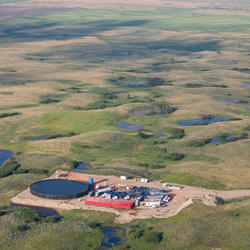
Energy Resources Life Cycle Integrated Science Team
The Energy Resources Life Cycle Integrated Science Team focuses on the potential for environmental contaminant exposures that might originate from energy resource activities including extraction, production, transportation, storage, waste management, and restoration. Perceived health risks to humans and other organisms will be distinguished from actual risks, if any. If actual risks are identified...
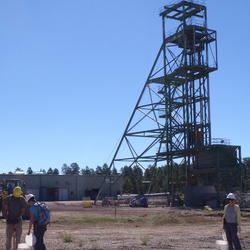
Minerals Resources Life Cycle Integrated Science Team
The Minerals Resources Life Cycle Integrated Science Team focuses on contaminant exposures in the environment that might originate from mineral resource activities including, transportation, storage, extraction and waste management. Perceived health risks to humans and other organisms will be distinguished from actual risks, if any. If actual risks are identified the science produced by this team...

Innovative Sensor Development for Detecting Low-Micrometer Plastics in Freshwater Systems
Plastic pollution is a significant global issue in aquatic ecosystems, with low-micrometer plastics (LMMPs) posing particular risks owing to their small size and prevalence in various environments. The U.S. Geological Survey and collaborators are developing an innovative sensor to detect and analyze LMMPs in freshwater systems, achieving rapid and accurate results without the need for additional...

Wildfires Increase Mercury Concentrations in Headwater Streams
The U.S. Geological Survey is researching the effect of wildfires on the release of stored mercury from forest watersheds and subsequent transport, methylmercury formation, and bioaccumulation post-fire. Wildfires not only alter the re-release of mercury into the environment but also affect its reactivity and availability to the food web, complicating predictions of mercury exposure risks to...