



EcoNews | Winter 2026 - Vol. 7 | Issue 1
Inside the Decades-Long Partnership Keeping Iconic Glacier National Park Road Safe
Inside the Decades-Long Partnership Keeping Iconic Glacier National Park Road Safe
Going-to-the-Sun Road Avalanche Forecasting Program
Going-to-the-Sun Road Avalanche Forecasting Program
Science for Public Safety
Science for Public Safety
-
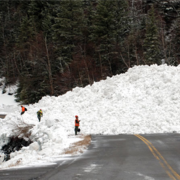
Ensuring Public Safety and Preparing for Hazards Ensuring Public Safety and Preparing for Hazards
The Land Change Science Program in the Ecosystems Mission Area develops pragmatic strategies and tools to safeguard communities, people, economically important natural resources and infrastructure from unpredictable threats such as fire, drought, and floods.
-

Providing Critical Weather Data for Public Safety Providing Critical Weather Data for Public Safety
Governmental and private industry partners rely on USGS science from the Ecosystems Land Change Science Program to deliver critical winter and fire weather forecasting, as well as inform safety and search and rescue operations.
USGS Sagebrush Science
USGS Sagebrush Science
Supporting Public Safety and Economic Decision Making Across the West
Supporting Public Safety and Economic Decision Making Across the West
Landscape Science
Landscape Science
-
Where Land Meets Sea: USGS Science for Resilient Coastal Habitats
USGS coastal science plays a critical role in supporting the effective, science-based management of coastal ecosystems, where the biodiversity of land and sea meet. It provides managers with the information they need to make sound decisions. Through cutting-edge research, predictive modeling, and decision-support tools, USGS empowers resource managers to make informed, science-based choices. From...ByEcosystems Mission Area, Land Management Research Program, California Water Science Center, Eastern Ecological Science Center, Forest and Rangeland Ecosystem Science Center, Lower Mississippi-Gulf Water Science Center, Pacific Coastal and Marine Science Center, Western Ecological Research Center (WERC), Western Fisheries Research Center, Western Geographic Science Center, Wetland and Aquatic Research Center
-

Biological Soil Crust ("Biocrust") Science
Biological soil crusts (biocrusts) are commonly found on the soil surface in arid and semi-arid ecosystems (collectively called drylands). Biocrusts can consist of mosses, cyanobacteria, lichens, algae, and microfungi, and they strongly interact with the soil. These organisms or consortium of disparate organisms, depending on the specific biocrust, are important to the functioning of ecosystems...
-

Wyoming Landscape Conservation Initiative (WLCI) research at NOROCK
The Wyoming Landscape Conservation Initiative (WLCI) addresses the impacts of land-use and habitat changes on Southwest Wyoming’s natural resources. This long-term project involves partners from 12 Federal, State, and local natural resource agencies, as well as non-governmental organizations. NOROCK scientists, partners, and scientists from other USGS centers conduct integrated research to support...
-
Trees Act Their Size, Not Their Age Trees Act Their Size, Not Their Age
Red spruce forests, once widespread across the central and southern Appalachians, now persist only in scattered fragments on mountaintops. Researchers are partnering with local community groups to restore the spruce forest’s structure, creating resilient habitat for wildlife, while also protecting clean water, carbon storage, and outdoor recreation in the Central Appalachians.
Managing for the Future of the Colorado River Basin
Managing for the Future of the Colorado River Basin
Environmental Health
Environmental Health
-

From Stream to Spider: How PFAS Move Through Aquatic and Terrestrial Food Webs
Per- and polyfluoroalkyl substances (PFAS) are persistent synthetic chemicals that accumulate in the environment and living organisms. A USGS study examined how different PFAS compounds move through a stream ecosystem and are transferred from aquatic to terrestrial food webs. The findings documented that not all PFAS behave the same once they enter the environment, leading to differences in...
-

Helping Secure Our Nation’s Food Supply: The Intersection of Agriculture, Health, and Environment
Agriculture is vital to the U.S. economy, supplying food, fibers, fuels, and jobs. Ensuring the quality of our natural resources is essential for keeping our food safe and plentiful. The USGS studies environmental factors affecting food security and offers valuable insights to reduce health risks, ensuring a safer food supply and a healthier environment.
-
Tracking Toxins at the Coastline: A National Look at Harmful Algal Toxins in U.S. Coastal Waters
This study is a major step forward in understanding how harmful algal blooms, which are often associated with lakes and rivers, can also affect coastal environments. It provides important baseline information for scientists, public health officials, and environmental managers.
Wildlife Science
Wildlife Science
-

Heat Stress in Alaska's Pacific Salmon
Alaska's freshwater spans a wide range of summer water temperatures, from ice-cold glacier water to warm rivers that routinely reach stressful levels for salmon, exceeding 18°C/64°F and even surpassing 21°C/70°F. Pacific salmon population trends are also varied and include declines in many Chinook salmon populations. Salmon declines are kitchen table issues because salmon fishing is key to the...
-
Biological Threats
Biological Threats
-
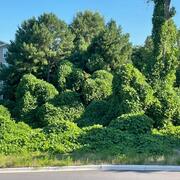
Deep Dive: Invasive Species in a Changing American Landscape
Invasive species are transforming and impacting ecosystems across the U.S. Explore how CASC science is helping partners detect, monitor, and manage invasive species to strengthen the resilience of infrastructure, wildfire response, forests, fisheries, rangelands, and national security.
-

USGS READI-Net Tests Next Generation Environmental DNA Sampling Robot for Early Detection of Biological Threats USGS READI-Net Tests Next Generation Environmental DNA Sampling Robot for Early Detection of Biological Threats
USGS READI-Net project team members and collaborators were trained by Monterey Bay Aquarium Research Institute staff on a next-generation environmental DNA autonomous robot—the Filtering Instrument for DNA Observation (FIDO). FIDO will enhance READI-Net’s ability to provide managers and scientists tools and strategies for early detection of biological threats.
-
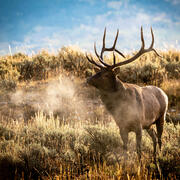
Between a Rock and a Hard Place: Experiences of the Chronic Wasting Disease Management Community Between a Rock and a Hard Place: Experiences of the Chronic Wasting Disease Management Community
Chronic Wasting Disease (CWD) has proven to be a complex issue for wildlife managers: effective disease management may not always align with stakeholder wants. In a new study, researchers found that some wildlife managers are feeling caught between a rock and a hard place, operating under constrained decision options where they may struggle to reduce CWD prevalence and meet the public’s needs.
USGS Invasive Species Science: Innovation for a Healthy Nation
USGS Invasive Species Science: Innovation for a Healthy Nation
A NAISMA Webinar | February 23
A NAISMA Webinar | February 23