



A Landsat 9 natural color image (left) and the corresponding Landsat Provisional Aquatic Reflectance product (right) display the properties of a massive algal bloom across the surface waters of Lake Erie on September 9, 2022.
Images
Peruse our selection of remote sensing and Earth science imagery below.
Filter Total Items: 889

Landsat Aquatic Reflectance of Lake Erie
A Landsat 9 natural color image (left) and the corresponding Landsat Provisional Aquatic Reflectance product (right) display the properties of a massive algal bloom across the surface waters of Lake Erie on September 9, 2022.

Collection 1 Datasets To Be Removed by End of 2022
Collection 1 Datasets To Be Removed by End of 2022By the end of December 2022, all Landsat Collection 1 data and science products will be removed from USGS data access platforms. This depreciation includes Level-1, Level-2, Level-3, and ESPA- related products. Collection 1 has not been updated with Landsat products since December 31, 2021.
Collection 1 Datasets To Be Removed by End of 2022
Collection 1 Datasets To Be Removed by End of 2022By the end of December 2022, all Landsat Collection 1 data and science products will be removed from USGS data access platforms. This depreciation includes Level-1, Level-2, Level-3, and ESPA- related products. Collection 1 has not been updated with Landsat products since December 31, 2021.

Dynamic surface water maps of Canada from 1984 to 2019 Landsat satellite imagery
Dynamic surface water maps of Canada from 1984 to 2019 Landsat satellite imageryThis paper presents dynamic surface water products over Canada from the first in a series of satellite sensors that will be used to develop a multi-sensor dynamic surface water monitoring system. The dataset uses 1984 to 2019 Landsat data to create annual water masks, inundation frequency and wetting/drying trends.
Dynamic surface water maps of Canada from 1984 to 2019 Landsat satellite imagery
Dynamic surface water maps of Canada from 1984 to 2019 Landsat satellite imageryThis paper presents dynamic surface water products over Canada from the first in a series of satellite sensors that will be used to develop a multi-sensor dynamic surface water monitoring system. The dataset uses 1984 to 2019 Landsat data to create annual water masks, inundation frequency and wetting/drying trends.

Landsat 9 Image of Kangerdlugssuaq Glacier, Greenland
Landsat 9 Image of Kangerdlugssuaq Glacier, GreenlandNamed after a Greenlandic word meaning “large fjord,” Kangerdlugssuaq Glacier is one of the largest tidewater outlet glaciers in Greenland. It flows from the fjord of the same name, the second largest found on the east side of the island. This false color Landsat 9 image was acquired July 29, 2022, using Bands 5|4|3.
Landsat 9 Image of Kangerdlugssuaq Glacier, Greenland
Landsat 9 Image of Kangerdlugssuaq Glacier, GreenlandNamed after a Greenlandic word meaning “large fjord,” Kangerdlugssuaq Glacier is one of the largest tidewater outlet glaciers in Greenland. It flows from the fjord of the same name, the second largest found on the east side of the island. This false color Landsat 9 image was acquired July 29, 2022, using Bands 5|4|3.

Special Issue: Landsat Update 50th Anniversary
Landsat Updates are prepared periodically and distributed electronically to provide information about Landsat activities and related topics of interest. Read this issue here.
Landsat Updates are prepared periodically and distributed electronically to provide information about Landsat activities and related topics of interest. Read this issue here.

Example of the Landsat Collection 2 Provisional Evapotranspiration science product
Example of the Landsat Collection 2 Provisional Evapotranspiration science productExample of the Landsat Collection 2 Provisional Evapotranspiration science product for agricultural fields on the Fucino plain near San Benedetto dei Marsi, Italy. Left: Landsat 9 Collection 2 Natural Color Surface Reflectance Image. Right: Landsat 9 Collection 2 Actual Evapotranspiration Image.
Example of the Landsat Collection 2 Provisional Evapotranspiration science product
Example of the Landsat Collection 2 Provisional Evapotranspiration science productExample of the Landsat Collection 2 Provisional Evapotranspiration science product for agricultural fields on the Fucino plain near San Benedetto dei Marsi, Italy. Left: Landsat 9 Collection 2 Natural Color Surface Reflectance Image. Right: Landsat 9 Collection 2 Actual Evapotranspiration Image.

Landsat 9 image of the Dallas - Fort Worth Area
This Landsat 9 image, showing the Dallas - Fort Worth area of Texas, was acquired on July 15, 2022. This false-color image vegetated land in shades of red, whereas grays and whites indicate urban or rocky surfaces.
This Landsat 9 image, showing the Dallas - Fort Worth area of Texas, was acquired on July 15, 2022. This false-color image vegetated land in shades of red, whereas grays and whites indicate urban or rocky surfaces.

EoE - Landsat 50 Lookback homepage
The home page image for podcast Eyes on Earth Episode 78 - Landsat 50 Lookback, which is set to air July 25, 2022.
The home page image for podcast Eyes on Earth Episode 78 - Landsat 50 Lookback, which is set to air July 25, 2022.

Landsat 8 Image of the Great Salt Lake in July, 2022
Landsat 8 Image of the Great Salt Lake in July, 2022Natural Color Landsat 8 image of the Great Salt Lake, acquired on July 3, 2022. On July 3, the level of Great Salt Lake dropped below the October 2021 historic low elevation.
Landsat 8 Image of the Great Salt Lake in July, 2022
Landsat 8 Image of the Great Salt Lake in July, 2022Natural Color Landsat 8 image of the Great Salt Lake, acquired on July 3, 2022. On July 3, the level of Great Salt Lake dropped below the October 2021 historic low elevation.

Brightness Temperature v. Time chart for TIRS
Over the course of the four-hour eclipse, the TIRS sensors observed the intensity of infrared light radiating from the Moon’s surface. From those radiances, scientists calculated the temperatures required to generate them. This “brightness temperature” of the lunar surface changed as Earth’s shadow marched across the lunar landscape.
Over the course of the four-hour eclipse, the TIRS sensors observed the intensity of infrared light radiating from the Moon’s surface. From those radiances, scientists calculated the temperatures required to generate them. This “brightness temperature” of the lunar surface changed as Earth’s shadow marched across the lunar landscape.

First Experiences with the Collection 1 Landsat 8 Aquatic Reflectance Product
First Experiences with the Collection 1 Landsat 8 Aquatic Reflectance Product

Mapping of Flood Areas Using Landsat with Google Earth Engine Cloud Platform
Mapping of Flood Areas Using Landsat with Google Earth Engine Cloud PlatformUsing Google Earth Engine and Landsat, this team created a rapid and robust tool for mapping historical flood inundation areas. This enhances existing efforts towards flood mitigation, monitoring, and management.
Mapping of Flood Areas Using Landsat with Google Earth Engine Cloud Platform
Mapping of Flood Areas Using Landsat with Google Earth Engine Cloud PlatformUsing Google Earth Engine and Landsat, this team created a rapid and robust tool for mapping historical flood inundation areas. This enhances existing efforts towards flood mitigation, monitoring, and management.

Landsat Looks At The Moon
Two Earth-observing satellites turned to watch a lunar eclipse, revealing dramatic and uneven temperature changes across our closest celestial neighbor.
NASA Earth Image of the Day for July 5, 2022
Instruments:
Landsat 8 — TIRS
Landsat 9 — TIRS-2
Photograph
Two Earth-observing satellites turned to watch a lunar eclipse, revealing dramatic and uneven temperature changes across our closest celestial neighbor.
NASA Earth Image of the Day for July 5, 2022
Instruments:
Landsat 8 — TIRS
Landsat 9 — TIRS-2
Photograph
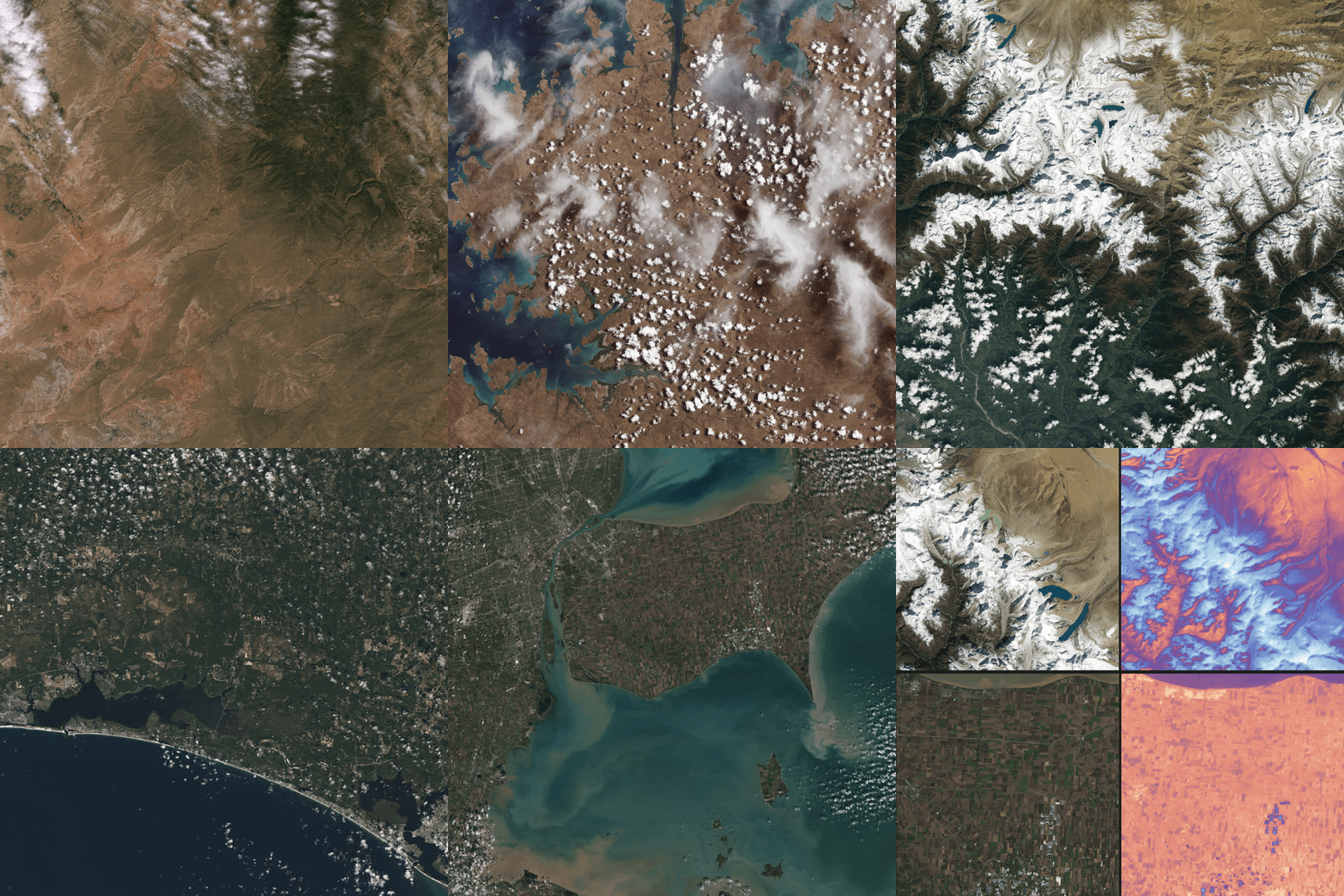
Landsat 9 First Light Images
Landsat 9 launched into space on September 27th, 2021. The "first light" images arrived on October 31st. On that day the satellite captured: algal blooms in Lake Erie, the glaciers of the Himalayas, bush fires in Australia's Eucalypt Woodlands, coastal communities on the Florida panhandle, and deserts, mountains and mesas across the Navajo Nation.
Landsat 9 launched into space on September 27th, 2021. The "first light" images arrived on October 31st. On that day the satellite captured: algal blooms in Lake Erie, the glaciers of the Himalayas, bush fires in Australia's Eucalypt Woodlands, coastal communities on the Florida panhandle, and deserts, mountains and mesas across the Navajo Nation.

Landsat Collections Screenshot
This screenshot shows what the Landsat Collections interactive looks like. This storymap collection combines all of the individual satellite storymaps into one location.
This screenshot shows what the Landsat Collections interactive looks like. This storymap collection combines all of the individual satellite storymaps into one location.

Landsat 8 Thermal Infrared Sensor Image near Ogallala, Nebraska
Landsat 8 Thermal Infrared Sensor Image near Ogallala, NebraskaLandsat 8 thermal infrared (Band 10) image near Ogallala, Nebraska, showing fields with center pivot irrigation. The Thermal Infrared Sensor (TIRS) on Landsat 8-9 measures energy radiated by the earth of the surface with two spectral bands that can be used to derive surface temperature.
The image was acquired on August 17, 2021 from Path 31 Row 32.
Landsat 8 Thermal Infrared Sensor Image near Ogallala, Nebraska
Landsat 8 Thermal Infrared Sensor Image near Ogallala, NebraskaLandsat 8 thermal infrared (Band 10) image near Ogallala, Nebraska, showing fields with center pivot irrigation. The Thermal Infrared Sensor (TIRS) on Landsat 8-9 measures energy radiated by the earth of the surface with two spectral bands that can be used to derive surface temperature.
The image was acquired on August 17, 2021 from Path 31 Row 32.

How Do You Landsat Overfly
An optimal opportunity for in-flight cross-calibration occurred when Landsat 9 flew underneath Landsat 8 while moving into its final orbit. Since the two satellites nearly identical imaging systems, the underfly event offered ideal cross-calibration conditions.
An optimal opportunity for in-flight cross-calibration occurred when Landsat 9 flew underneath Landsat 8 while moving into its final orbit. Since the two satellites nearly identical imaging systems, the underfly event offered ideal cross-calibration conditions.

Latest in Landsat June Newsletter
In this June 2022 issue read highlights from an international partner meeting, explore published Landsat articles, and dive into new interactive tools. Find the newsletter here: https://www.usgs.gov/latest-landsat-newsletter/latest-landsat-newslette…
In this June 2022 issue read highlights from an international partner meeting, explore published Landsat articles, and dive into new interactive tools. Find the newsletter here: https://www.usgs.gov/latest-landsat-newsletter/latest-landsat-newslette…

EoE - EMIT Mission homepage
Clockwise from lower left: Phil Brodrick, Raymond Kokaly, David Thompson of the EMIT Science Team, pictured with the logo for the USGS EROS Center podcast “Eyes on Earth.”
Clockwise from lower left: Phil Brodrick, Raymond Kokaly, David Thompson of the EMIT Science Team, pictured with the logo for the USGS EROS Center podcast “Eyes on Earth.”

Landsat: Celebrating 50 Years
Thumbnail for USGS Earth Resources Observation and Science (EROS) Center video "Landsat: Celebrating 50 Years."
Thumbnail for USGS Earth Resources Observation and Science (EROS) Center video "Landsat: Celebrating 50 Years."

Attendees of the Landsat Ground Station Operators Working Group (LGSOWG) #50 meeting
Attendees of the Landsat Ground Station Operators Working Group (LGSOWG) #50 meetingAttendees of the Landsat Ground Station Operators Working Group (LGSOWG) #50 meeting. The meeting was held in Pretoria, South Africa during the first week of May, 2022.
For more information on the Landsat International Cooperator Network, visit https://landsat.usgs.gov/igs-network/
Attendees of the Landsat Ground Station Operators Working Group (LGSOWG) #50 meeting
Attendees of the Landsat Ground Station Operators Working Group (LGSOWG) #50 meetingAttendees of the Landsat Ground Station Operators Working Group (LGSOWG) #50 meeting. The meeting was held in Pretoria, South Africa during the first week of May, 2022.
For more information on the Landsat International Cooperator Network, visit https://landsat.usgs.gov/igs-network/