



Stephanie Romañach, Ph.D. (Former Employee)
Science and Products
Filter Total Items: 37
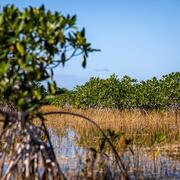
Engaging Indigenous Communities to Co-Design a Web Application to Protect Everglades Tree Islands
The USGS collaborated with the Miccosukee and Seminole Tribes to co-design a dashboard mock-up for a real-time web application that monitors tree island health in the Everglades.
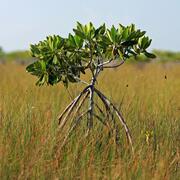
Developing a Roadmap for the Future of Natural Resources in Everglades National Park
To sustain economic and ecologically viable ecosystems into the future, USGS is developing freshwater delivery targets for water flowing southward into Everglades National Park by integrating climate and sea level projections, hydrologic modeling, and ecological modeling to forecast ecosystem responses to future freshwater availability scenarios.

Coastal Wetland Vulnerability to Climate Change and Sea-Level Rise: Understanding Ecological Thresholds and Ecosystem Transformations
Eighteen USGS coastal scientists from all four coasts of the conterminous United States are working together to advance the understanding of climate change and sea-level rise impacts to coastal wetlands.
By
California Water Science Center, Chesapeake Bay Activities, Eastern Ecological Science Center, Florence Bascom Geoscience Center, Great Lakes Science Center, Pacific Coastal and Marine Science Center, St. Petersburg Coastal and Marine Science Center, Western Ecological Research Center (WERC), Western Geographic Science Center, Wetland and Aquatic Research Center , Woods Hole Coastal and Marine Science Center

Decision Support Tools for Everglades Ecosystem-Based Management
The USGS Joint Ecosystem Modeling team will work with partners to identify and develop decision support tools for Everglades water management.

Evaluating Population Viability and Habitat Suitability for the Cape Sable Seaside Sparrow Under Future Climate and Management Conditions
WARC will assess Cape Sable seaside sparrow population response and viability under different management and habitat change scenarios. The USGS EverSparrow model will be run on future scenarios, and differences in the predicted probability of presence and the efficacy of varying conservation strategies will be evaluated.

Ecological Model Support for the Biscayne Bay and Southeastern Everglades Restoration Project
The Joint Ecosystem Modeling team will provide model output for a suite of ecological models to aid in restoration decision planning for the Biscayne Bay and Southeastern Everglades Restoration Project.

Ecological Modeling for the Central Everglades Planning Project (CEPP) Operational Plan
The Joint Ecosystem Modeling team will run a suite of 13 ecological models to provide insight into alternative restoration plans' ecological performance, unintended ecological conditions, and potential conflicts with other Comprehensive Everglades Restoration Plan (CERP) goals.

Adding an Aquatic Prey Fish Module within the Everglades Vulnerability Analysis Modeling Framework
The USGS Joint Ecosystem Modeling team will use Bayesian networks to build a spatially explicit Everglades Vulnerability Analysis module based on current knowledge and existing data on fish density and biomass trends on the landscape.

Demographic Analysis of the Endangered Cape Sable Seaside Sparrow
USGS researchers will examine how hydrology and landscape vegetation changes impact Cape Sable Seaside Sparrow survival and population growth.

Comparing EverForecast to the South Florida Water Management District’s Position Analysis
USGS will compare the EverForecast hydrologic forecast, the South Florida Water Management District's Position Analysis, and observed water level recordings from gages located across the Everglades landscape to examine which forecast performs better during the wet and dry seasons; wet, dry, or average years; or in different areas of the Everglades.

Engaging Indigenous Communities to Co-Design a Real-time Monitoring Application to Protect their Socio-Cultural and Ecological Areas
Everglades tree islands are traditional homes of the Miccosukee and Seminole Tribes and contain their ancestral remains, but no monitoring tool exists for water managers to protect sites from destructive flooding. We propose stakeholder workshops to codesign a monitoring application with the Tribes.
Knowledge Synthesis of Cape Sable Seaside Sparrow Science
WARC researchers have developed a literature review of science on the Cape Sable Seaside Sparrow focused on topics relevant to upcoming management decisions.
Science and Products
Filter Total Items: 37
Engaging Indigenous Communities to Co-Design a Web Application to Protect Everglades Tree Islands
The USGS collaborated with the Miccosukee and Seminole Tribes to co-design a dashboard mock-up for a real-time web application that monitors tree island health in the Everglades.
Developing a Roadmap for the Future of Natural Resources in Everglades National Park
To sustain economic and ecologically viable ecosystems into the future, USGS is developing freshwater delivery targets for water flowing southward into Everglades National Park by integrating climate and sea level projections, hydrologic modeling, and ecological modeling to forecast ecosystem responses to future freshwater availability scenarios.
Coastal Wetland Vulnerability to Climate Change and Sea-Level Rise: Understanding Ecological Thresholds and Ecosystem Transformations
Eighteen USGS coastal scientists from all four coasts of the conterminous United States are working together to advance the understanding of climate change and sea-level rise impacts to coastal wetlands.
By
California Water Science Center, Chesapeake Bay Activities, Eastern Ecological Science Center, Florence Bascom Geoscience Center, Great Lakes Science Center, Pacific Coastal and Marine Science Center, St. Petersburg Coastal and Marine Science Center, Western Ecological Research Center (WERC), Western Geographic Science Center, Wetland and Aquatic Research Center , Woods Hole Coastal and Marine Science Center
Decision Support Tools for Everglades Ecosystem-Based Management
The USGS Joint Ecosystem Modeling team will work with partners to identify and develop decision support tools for Everglades water management.
Evaluating Population Viability and Habitat Suitability for the Cape Sable Seaside Sparrow Under Future Climate and Management Conditions
WARC will assess Cape Sable seaside sparrow population response and viability under different management and habitat change scenarios. The USGS EverSparrow model will be run on future scenarios, and differences in the predicted probability of presence and the efficacy of varying conservation strategies will be evaluated.
Ecological Model Support for the Biscayne Bay and Southeastern Everglades Restoration Project
The Joint Ecosystem Modeling team will provide model output for a suite of ecological models to aid in restoration decision planning for the Biscayne Bay and Southeastern Everglades Restoration Project.
Ecological Modeling for the Central Everglades Planning Project (CEPP) Operational Plan
The Joint Ecosystem Modeling team will run a suite of 13 ecological models to provide insight into alternative restoration plans' ecological performance, unintended ecological conditions, and potential conflicts with other Comprehensive Everglades Restoration Plan (CERP) goals.
Adding an Aquatic Prey Fish Module within the Everglades Vulnerability Analysis Modeling Framework
The USGS Joint Ecosystem Modeling team will use Bayesian networks to build a spatially explicit Everglades Vulnerability Analysis module based on current knowledge and existing data on fish density and biomass trends on the landscape.
Demographic Analysis of the Endangered Cape Sable Seaside Sparrow
USGS researchers will examine how hydrology and landscape vegetation changes impact Cape Sable Seaside Sparrow survival and population growth.
Comparing EverForecast to the South Florida Water Management District’s Position Analysis
USGS will compare the EverForecast hydrologic forecast, the South Florida Water Management District's Position Analysis, and observed water level recordings from gages located across the Everglades landscape to examine which forecast performs better during the wet and dry seasons; wet, dry, or average years; or in different areas of the Everglades.
Engaging Indigenous Communities to Co-Design a Real-time Monitoring Application to Protect their Socio-Cultural and Ecological Areas
Everglades tree islands are traditional homes of the Miccosukee and Seminole Tribes and contain their ancestral remains, but no monitoring tool exists for water managers to protect sites from destructive flooding. We propose stakeholder workshops to codesign a monitoring application with the Tribes.
Knowledge Synthesis of Cape Sable Seaside Sparrow Science
WARC researchers have developed a literature review of science on the Cape Sable Seaside Sparrow focused on topics relevant to upcoming management decisions.