An official website of the United States government
Here's how you know
Official websites use .gov
A .gov website belongs to an official government organization in the United States.
Secure .gov websites use HTTPS
A lock () or https:// means you’ve safely connected to the .gov website. Share sensitive information only on official, secure websites.

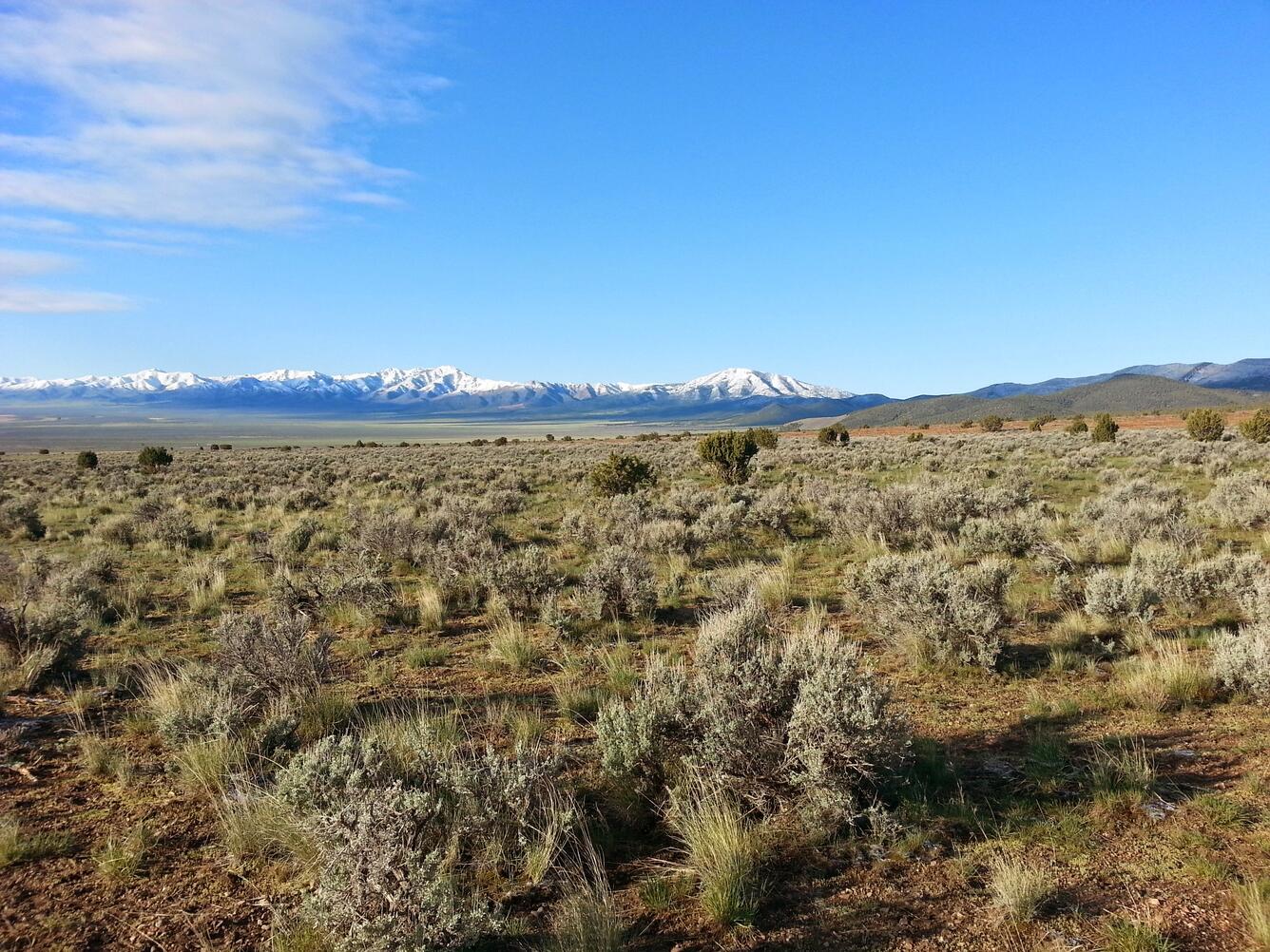
The sagebrush ecosystem faces major challenges including an increasing risk of wildfire and invasive grasses. USGS is a leader in sagebrush ecosystem research to meet the priority science needs of management agencies.
The USGS is collaborating with partners to increase the supply of native seeds for restoration through the National Seed Strategy for Rehabilitation and Restoration.
Where would we be without plants? They are the basis of the food chain and producers of oxygen - and so much more. From marsh grasses to mangroves, from sagebrush to sunflowers, getting to the root of the biology and ecology of plants is a critical component of USGS research.
An Integral Part of Life on Earth
Life as we know it wouldn’t be possible without plants. Plants maintain the atmosphere by producing oxygen and absorbing carbon dioxide, help keep our waterways clean, and provide us with food, shelter, and medicine. Plant communities are influenced by soil, terrain, climate, animals, and human activities, so different groups and types of plants are found in different regions of the country. Grassland plants such as the western prairie fringed orchid are found in the Great Plains, while desert plants such as the saguaro cactus are found in the Southwest. Approximately 391,000 species of vascular plants are currently known to science. Explore examples of USGS science on different plant types below.
Healthy plants are the foundation of healthy ecosystems. In an era of global change, our Nation’s forests, grasslands, wetlands, and other critical habitats are facing multiple threats that challenge our ability to maintain these ecosystems and the species that depend on them. USGS science provides the information needed to address these challenges and support healthy, thriving plant communities across the country.
Threats to Plants
Understanding, monitoring, and predicting threats to plants contributes to the USGS goal of providing science to support the protection, conservation, and enhancement of the Nation’s biodiversity. Through activities such as identifying strategies for controlling invasive cheatgrass, using novel techniques to identify the presence of disease-causing plant pathogens, and informing recovery plans for at-risk species, USGS science is tackling some of the biggest threats facing plants today.
Land Use Change
The single biggest threat facing plants today is habitat loss. Changes in land use, such as the encroachment of agriculture or urban development into areas that were once covered by natural vegetation, reduce plant population sizes and alter the ecosystems that plants, animals, and humans rely on. Changes in land use can cause species extinctions, destabilize soil, increase erosion, and reduce water quality. USGS scientists are monitoring changes in land use to understand how they are affecting the plants and wildlife that depend on them. Explore examples of our science below:
Monitoring and assessing the effectiveness of habitat management projects in southwest Wyoming, a 19-million-acre region that supports some of the highest quality wildlife habitats in the Intermountain West, as well as agriculture and energy production. Learn more>>
Identifying the effects of wind turbines and associated infrastructure on vegetation and how wildlife use these landscapes. Learn more>>
Understanding how agricultural drainage systems affect wetlands in the Prairie Pothole Region. Learn more>>
Using satellite imagery to monitor changes in vegetation across the country. Learn more>>
Many noxious, invasive species infest our nation’s wetlands. One example is a new type of phragmites, a wetlands grass from Europe that has rapidly spread across the continent, altering soil, producing copious seeds, and resulting in dense stands of mostly one-plant – phragmites – stands. The result: plant species diversity declines, and critical habitat for fish, reptiles, amphibians and birds is lost. The species is rapidly invading the few remaining marshes in the Great Lakes, but USGS scientists and their colleagues are using cutting-edge research to try to fight back.
Every plant and animal species has a native range where it evolved. When a species exists in a location beyond its natural range, it is considered a “non-native” species in that area. When a non-native species establishes in a new habitat, causing harm to the environment or humans, it becomes “invasive”. The annual estimated economic and health-related costs of invasive species in the U.S. have been reported at more than \$21 billion and adversely affect every state in the country. Invasive plants represent a major threat to global and local biodiversity while also having negative socio-economic and human health impacts. Invasive plants displace native plants, prevent native plant growth, reduce agricultural production, and induce allergies.
Invasive plants such as cheatgrass and buffelgrass have increased fire vulnerability and diminished grazing value across the western U.S. Aquatic invasive plants such as the weed hydrilla and giant fern salvinia are clogging waterways. To help combat these invaders, USGS scientists are using new tools to model the potential spread of high impact invasive species and to support the early detection and rapid response of invasive species before they are able to spread and cause harm. If an invasive plant is already established, USGS science is helping land managers reverse and mitigate the negative impacts these invasions are causing. Explore examples of our science to understand and reduce the threat of invasive plants below:
Understanding how invasive plants affect wildfire patterns. Learn more>>
Developing the Nonindigenous Aquatic Species (NAS) Alert Risk Mapper: A tool to characterize waterbodies at risk of invasion from new non-native species. Learn more>>
Using Unmanned Aerial Systems (UAS) to track the spread of Salvinia molesta, a non-native aquatic species that reduces light and oxygen levels in water, making it unsuitable for fish and other aquatic life. Learn more>>
Identifying strategies for controlling invasive cheatgrass in the western U.S. Learn more>>
Visit our Invasive Species webpage to learn more about USGS activities to monitor and respond to the threat of invasive species across the country.
Carol Damberg (USFWS) conducting survey of eelgrass (Zostera marina) in Izembek Lagoon, Alaska, 2015.
USGS research is addressing numerous diseases in both plants and animals and leading development efforts in advanced tools such as environmental DNA (eDNA) to assist in prevention and early detection. Explore examples of our science on plant diseases and pathogens below:
Using new environmental DNA (eDNA) methods to identify the presence of pathogens known to cause the decline of eelgrass, which provides important habitat for birds, fish, and invertebrates in southwestern Alaska. Learn more>>
Deploying a portable lab to speed detection of pathogens responsible for Rapid ‘Ōhi‘a Death (ROD), a rapidly spreading disease affecting a keystone tree species in Hawai’i. Learn more>>
Using decades of Landsat satellite imagery to map bark beetle outbreaks, which have devastated certain species of evergreen trees in the Rocky Mountains. Learn more>>
Climate Change
Climate helps shape ecosystems. Things like average temperatures, humidity, and rainfall determine where plants and animals lives. If a region’s climate changes, the ecosystem changes as well. Climate change poses one of the biggest threats to plants, leading to an increased spread of invasive species, increased vulnerability to insect pests, the loss of native plant speciesand changes in their distribution. USGS scientists are leading efforts to understand the current and future impacts of climate change on plants. This information helps management agencies identify adaptation strategies and actions that can help support vulnerable plant species in the face of a changing climate. Explore examples of our science below:
Monitoring the conversion of tidal freshwater wetlands in the Southeast and mid-Atlantic to “Ghost Forests”—forests in which trees have died due to increases in salinity as sea levels rise and push saltier water upstream. Learn more>>
Identifying how changes in the amount and timing of precipitation affect big sagebrush in the Great Basin. Learn more>>
Investigating the effects of drought and warming temperatures on plants in the southwestern U.S. Learn more>>
Exploring the effects of estimated future sea-level rise on mangrove forests in Micronesia. Learn more>>
Using satellite data to monitor changes in phenology, or the study of animal and plant life cycles, a powerful tool for understanding life cycle trends and the impacts of climate change on ecosystems. Learn more>>
Species at Risk
As a result of threats such as the spread of invasive species, disease, and climate and land use change, some plant species are in decline or in danger of extinction. The USGS provides management agencies such as the U.S. Fish and Wildlife Agency and National Park Service with scientific information to support conservation decisions for at-risk plant species. Explore examples of our science below:
USGS scientists are studying how rare plants across California’s Channel Islands and in the Great Lakes region are affected by invasive plants and changes in climate and land use. These activities support the National Park Service, U.S. Fish and Wildlife Agency, and conservation organizations in building recovery plans for at-risk plants.
The critically endangered succulent Portulaca sclerocarpa is found only on the Island of Hawai‘i and on a small islet off the coast of Lāna‘i. USGS scientists are working with the National Park Service to identify threats to the plant and what habitats might be best for planting success.
In the Mojave Desert, plants are able to survive extreme conditions. Yet changes in climate, wildfire patterns, and visitor use on dunes are impacting rare and at-risk plants. USGS scientists are studying the effects of these stressors on plants such as primrose, Eureka Valley dune grass, and the Joshua tree to inform management of these species.
Ecosystem Restoration
Ecosystem restoration is the act of rehabilitating a degraded or lost ecosystems through activities such as planting native trees and shrubs and controlling invasive species. To do this, land managers need tools to help get the right plants, in the right place, at the right time for successful restoration. The USGS develops strategies and techniques to understand and facilitate the restoration of native species and habitats that have deteriorated due to threats such as invasive species and climate change. Explore examples of our science below:
The Restoration Assessment and Monitoring Program for the Southwest (RAMPS) helps land management agencies develop successful techniques for improving land condition in dryland ecosystems of the Southwest. RAMPS has created a hub for information and tools to help managers identify strategies to restore degraded lands.
California’s Channel Islands were once home to cloud forests, lush groves of pines and oaks and shrubs, covered in moss and lichens, but this unique ecosystem was lost to overgrazing. USGS scientists are restoring these cloud forests by rebuilding three key components: soil, water, and plants.
Restoring drylands across the western U.S. is notoriously challenging due to highly variable and unpredictable precipitation. USGS scientists are using genetics to identify native plant seeds that are best adapted to survive and thrive in this harsh landscape.
Habitat models can provide critical information on the current and potential distribution of plant species, as well as help target and support conservation efforts. Despite their potential utility in public land management, model use may be constrained by a variety of factors including staff access to and trust in models. In this project, we seek to bring together model users and model developers...
Fostering greater use of habitat models for managing rare and invasive plants on public lands
Habitat models can provide critical information on the current and potential distribution of plant species, as well as help target and support conservation efforts. Despite their potential utility in public land management, model use may be constrained by a variety of factors including staff access to and trust in models. In this project, we seek to bring together model users and model developers...
Riparian plant communities, associated with rivers and streams, are ecologically and culturally important areas in the southwestern U.S. Despite covering less than 2% of the land area in the southwest, the resources provided by these communities make them valuable to wildlife, the public, scientists, and resource managers.
To support the Department of Interior's bureaus, states, and local communities, we are developing 1) a document highlighting remote sensing approaches that can be leveraged for site prioritization, recovery design, and long-term assessments of recovery trends, and 2) data products of vegetation conditions, change, recovery potential, and risk of exotic plant invasion on mine lands. We will...
Spatiotemporal conditions of vegetation and invasive plant species on mine lands.
To support the Department of Interior's bureaus, states, and local communities, we are developing 1) a document highlighting remote sensing approaches that can be leveraged for site prioritization, recovery design, and long-term assessments of recovery trends, and 2) data products of vegetation conditions, change, recovery potential, and risk of exotic plant invasion on mine lands. We will...
The USGS is developing innovative Phragmites control measures to keep this rapidly spreading invasive plant from further expanding its range into new wetland habitats and to aid in the development of successful restoration strategies. Scientists are conducting studies and field tests to determine (1) if microbes (i.e., fungi and bacteria) that live within and around Phragmites are enabling the...
Invasive Phragmites Science: Using Microbial Interactions to Foster the Restoration of Great Lakes Wetlands
The USGS is developing innovative Phragmites control measures to keep this rapidly spreading invasive plant from further expanding its range into new wetland habitats and to aid in the development of successful restoration strategies. Scientists are conducting studies and field tests to determine (1) if microbes (i.e., fungi and bacteria) that live within and around Phragmites are enabling the...
This project analyzes on-the-ground plant monitoring data across sagebrush and rangeland ecosystems to examine how fire, climate, topography, and plant communities influence the success of invasive annual grasses after fires.
Predicting risk of annual grass invasion following fire in sagebrush steppe and rangeland ecosystems
This project analyzes on-the-ground plant monitoring data across sagebrush and rangeland ecosystems to examine how fire, climate, topography, and plant communities influence the success of invasive annual grasses after fires.
USGS Director David Applegate and Others Learn About Invasive Phragmites australis
USGS Director David Applegate along with Associate Director Anne Kinsinger and Dr. Kurt Kowalski listen to Dr. Wes Bickford describe invasive Phragmites australis and the research being done at the Great Lakes Science Center to control it. Photo Credit: Josh Miller (USGS)
Biological carbon sequestration is the natural ability of life and ecosystems to store carbon. Forests, peat marshes, and coastal wetlands are particularly good as storing carbon. Carbon can be stored in plant tissue, such as long-lived tree bark or in extensive root systems. Microbes break down plant and animal tissue through decomposition.
A basic overview of the nitrogen cycle. Red arrows represent the portions of the nitrogen cycle (decomposition and nitrification) that are performed by our laboratory’s microbial culture.
Tidal Freshwater Forest Transitioning to Brackish Marsh, Pamunkey River, Virgina
Tidal freshwater forest transitioning to brackish marsh along the Pamunkey River, Virginia, as low-level salinization kills trees (forming ‘ghost forest’) that are replaced with marsh plants.
Habitat models can provide critical information on the current and potential distribution of plant species, as well as help target and support conservation efforts. Despite their potential utility in public land management, model use may be constrained by a variety of factors including staff access to and trust in models. In this project, we seek to bring together model users and model developers...
Fostering greater use of habitat models for managing rare and invasive plants on public lands
Habitat models can provide critical information on the current and potential distribution of plant species, as well as help target and support conservation efforts. Despite their potential utility in public land management, model use may be constrained by a variety of factors including staff access to and trust in models. In this project, we seek to bring together model users and model developers...
Riparian plant communities, associated with rivers and streams, are ecologically and culturally important areas in the southwestern U.S. Despite covering less than 2% of the land area in the southwest, the resources provided by these communities make them valuable to wildlife, the public, scientists, and resource managers.
To support the Department of Interior's bureaus, states, and local communities, we are developing 1) a document highlighting remote sensing approaches that can be leveraged for site prioritization, recovery design, and long-term assessments of recovery trends, and 2) data products of vegetation conditions, change, recovery potential, and risk of exotic plant invasion on mine lands. We will...
Spatiotemporal conditions of vegetation and invasive plant species on mine lands.
To support the Department of Interior's bureaus, states, and local communities, we are developing 1) a document highlighting remote sensing approaches that can be leveraged for site prioritization, recovery design, and long-term assessments of recovery trends, and 2) data products of vegetation conditions, change, recovery potential, and risk of exotic plant invasion on mine lands. We will...
The USGS is developing innovative Phragmites control measures to keep this rapidly spreading invasive plant from further expanding its range into new wetland habitats and to aid in the development of successful restoration strategies. Scientists are conducting studies and field tests to determine (1) if microbes (i.e., fungi and bacteria) that live within and around Phragmites are enabling the...
Invasive Phragmites Science: Using Microbial Interactions to Foster the Restoration of Great Lakes Wetlands
The USGS is developing innovative Phragmites control measures to keep this rapidly spreading invasive plant from further expanding its range into new wetland habitats and to aid in the development of successful restoration strategies. Scientists are conducting studies and field tests to determine (1) if microbes (i.e., fungi and bacteria) that live within and around Phragmites are enabling the...
This project analyzes on-the-ground plant monitoring data across sagebrush and rangeland ecosystems to examine how fire, climate, topography, and plant communities influence the success of invasive annual grasses after fires.
Predicting risk of annual grass invasion following fire in sagebrush steppe and rangeland ecosystems
This project analyzes on-the-ground plant monitoring data across sagebrush and rangeland ecosystems to examine how fire, climate, topography, and plant communities influence the success of invasive annual grasses after fires.
Invasive plants negatively impact our water, wildlife, and way of life. Current management tools are not cutting it, so a multi-agency research team is using molecular biotechnology to develop new species-specific treatments that help land managers improve the natural resources that we depend on and have more management options during droughts, floods, and other periods of plant stress. This...
Invasive Phragmites Science: Using Cutting-Edge Genetic Approaches to Develop New Management Tools for the Control of Invasive Phragmites
Invasive plants negatively impact our water, wildlife, and way of life. Current management tools are not cutting it, so a multi-agency research team is using molecular biotechnology to develop new species-specific treatments that help land managers improve the natural resources that we depend on and have more management options during droughts, floods, and other periods of plant stress. This...
The saguaro cactus ( Carnegiea gigantea) is a keystone species that grows only in the Sonoran Desert of northern Mexico and the southwestern United States. The USGS’ Southwest Biological Science Center is working to better understand the species’ biological features, its role as a keystone species that supports greater than 100 other plant and animal species, and its responses to extreme drought...
The iconic giant saguaro cactus in the Sonoran Desert
The saguaro cactus ( Carnegiea gigantea) is a keystone species that grows only in the Sonoran Desert of northern Mexico and the southwestern United States. The USGS’ Southwest Biological Science Center is working to better understand the species’ biological features, its role as a keystone species that supports greater than 100 other plant and animal species, and its responses to extreme drought...
The spread of highly-invasive non-native plant species in Hawaiʻi’s forests may be reducing freshwater availability across the islands. However, little information has been collected to determine the effects of highly-invasive non-native plant species on freshwater resources. The lack of information, in turn, limits the development of effective management strategies for preserving Hawaiʻi’s...
Effects of High-Priority Non-Native and Dominant Native Plant Species on the Water Cycle
The spread of highly-invasive non-native plant species in Hawaiʻi’s forests may be reducing freshwater availability across the islands. However, little information has been collected to determine the effects of highly-invasive non-native plant species on freshwater resources. The lack of information, in turn, limits the development of effective management strategies for preserving Hawaiʻi’s...
The "Phragmites Management and Variable Great Lakes Water Levels" GeoNarrative presents research by the US Geological Survey and US Fish and Wildlife Service on how Great Lakes water levels affect expansion and management of coastal Phragmites populations.
Effects of Great Lakes water levels on coastal populations of Phragmites australis GeoNarrative
The "Phragmites Management and Variable Great Lakes Water Levels" GeoNarrative presents research by the US Geological Survey and US Fish and Wildlife Service on how Great Lakes water levels affect expansion and management of coastal Phragmites populations.
Drylands (sometimes called ‘deserts’ or ‘arid and semi-arid' ecosystems) are defined by water scarcity. Understanding how land-use activities may effect dryland ecosystems and dryland ecological processes is a high priority for land conservation and management. Grazing by domestic livestock (typically cattle but also sheep and goats) is the most widespread land-use in drylands globally and a large...
Drought & Grazing Experiment: Understanding Impacts and Identifying Mitigation Strategies
Drylands (sometimes called ‘deserts’ or ‘arid and semi-arid' ecosystems) are defined by water scarcity. Understanding how land-use activities may effect dryland ecosystems and dryland ecological processes is a high priority for land conservation and management. Grazing by domestic livestock (typically cattle but also sheep and goats) is the most widespread land-use in drylands globally and a large...
Many non-native fish, invertebrates, and plants have colonized the Sacramento-San Joaquin Delta (Delta) of California, the landward most region of the San Francisco Estuary. Included among these invasive species is the water primrose ( Ludwigia spp .), an aggressive floating aquatic plant that is native to South and Central America and parts of the US, but invasive in California. Water primrose is...
Ecosystem Engineering Impacts of Water Primrose in the Sacramento-San Joaquin Delta
Many non-native fish, invertebrates, and plants have colonized the Sacramento-San Joaquin Delta (Delta) of California, the landward most region of the San Francisco Estuary. Included among these invasive species is the water primrose ( Ludwigia spp .), an aggressive floating aquatic plant that is native to South and Central America and parts of the US, but invasive in California. Water primrose is...
In California, drought and warmer climates have increased the prevalence, severity, and duration of wildfires. These fires have destroyed over 129 million trees. In the aftermath of this devastation, there is heightened urgency to increase the capacity of seedling production, particularly for the lower-elevation and private lands that CAL FIRE is responsible to help manage. To support CAL FIRE in...
Researching Climate Conditions for CAL FIRE Wildfire Restoration Efforts
In California, drought and warmer climates have increased the prevalence, severity, and duration of wildfires. These fires have destroyed over 129 million trees. In the aftermath of this devastation, there is heightened urgency to increase the capacity of seedling production, particularly for the lower-elevation and private lands that CAL FIRE is responsible to help manage. To support CAL FIRE in...
These data were compiled as a part of a landscape conservation design effort for the sagebrush biome, and are the result of applying a spatially explicit model that assessed geographic patterns in sagebrush ecological integrity and used these results to identify Core Sagebrush Areas (CSAs), Growth Opportunity Areas (GOAs), and Other Rangeland Areas (ORAs). Our overall objective in this...
The National Vegetation Classification (NVC) is your guide to inventorying plant communities. The standard allows users to produce uniform statistics about vegetation resources across the nation. CSAS&L actively participates in the development of this important standard through our involvement with the FGDC Vegetation Subcommittee and the ESA Vegetation Panel.
USGS Director David Applegate and Others Learn About Invasive Phragmites australis
USGS Director David Applegate along with Associate Director Anne Kinsinger and Dr. Kurt Kowalski listen to Dr. Wes Bickford describe invasive Phragmites australis and the research being done at the Great Lakes Science Center to control it. Photo Credit: Josh Miller (USGS)
Biological carbon sequestration is the natural ability of life and ecosystems to store carbon. Forests, peat marshes, and coastal wetlands are particularly good as storing carbon. Carbon can be stored in plant tissue, such as long-lived tree bark or in extensive root systems. Microbes break down plant and animal tissue through decomposition.
A basic overview of the nitrogen cycle. Red arrows represent the portions of the nitrogen cycle (decomposition and nitrification) that are performed by our laboratory’s microbial culture.
Tidal Freshwater Forest Transitioning to Brackish Marsh, Pamunkey River, Virgina
Tidal freshwater forest transitioning to brackish marsh along the Pamunkey River, Virginia, as low-level salinization kills trees (forming ‘ghost forest’) that are replaced with marsh plants.
A prairie sunflower (Helianthus petiolaris) stands out from the dry landscape of sand and beach grass at West Beach in Indiana Dunes National Park. Photo credit: Johanna Nifosi, USGS.
Hawkmoth flying near milkweed plant in North Dakota
Hawkmoth flying near milkweed plant in North Dakota. Northern Prairie Wildlife Research Center is monitoring milkweed populations across the Central United States.
Connecting powerline rights-of-way vegetation management to improve pollinator habitat. A USGS RAMPS technician samples pollinating insects along the Salt River Project powerline that crosses through Apache-Sitgreaves and Tonto National Forests.
The extensive rangelands across the Western United States are threatened by invasive grasses, climate change, and altered fire regimes that can disturb the landscape. The largely semi-arid lands are also important for the survival of species that need undisturbed sagebrush ecosystems to thrive.
Lesley DeFalco works on post-fire plant surveys in Nevada
Research scientist Lesley DeFalco works on native and invasive annual plant sampling at the site of the Tramp Fire,one of 12 fires for which the USGS and the BLM are implementing landscape scale restoration treatments.
Three researchers on the summit of Dancing Lady Mountain set up tapes and grids to complete a Global Observation Research Initiative in Alpine Environments network (GLORIA) vegetation survey.
Researchers evaluate vegetation during a Global Observation Research Initiative in Alpine (GLORIA) alpine plant survey near the summit of Seward Mountain in Glacier National Park, Montana.
Eyes on Earth Episode 12 – Plant Health via Satellite (NDVI)
A farmer at the foot of a corn stalk can tell how well the plant is faring. That same farmer might survey his entire field for crop health. But assessing the health of crops or forests at regional, national, and international scales requires remote sensing, most often via satellite.
A new strategy to help unleash USGS eDNA capabilities
Imagine you could use just a few drops of water to know what sorts of animals and plants were present in an area. What an incredible tool this would...
Identifying High-Impact Invasive Plants to Watch for in the Mid-Atlantic
The Northeast CASC University Co-Director and collaborators identified 32 high-impact invasive species known to have negative ecological and economic...
Slow, but Steady Improvement: 25 Years of Monitoring Reveals Impacts of the Northwest Forest Plan on Watersheds
A team of U.S. Geological Survey, U.S. Forest Service, and Oregon State University scientists published a report summarizing a quarter century of data...
Under the Endangered Species Act (ESA), plant and animal species may be listed as either endangered or threatened. “Endangered” means a species is in danger of extinction throughout all or a significant portion of its range. “Threatened” means a species is likely to become endangered within the foreseeable future. States have their own ESA-type laws, so species can have different Threatened...
What are the differences between endangered, threatened, imperiled, and at-risk species?
Under the Endangered Species Act (ESA), plant and animal species may be listed as either endangered or threatened. “Endangered” means a species is in danger of extinction throughout all or a significant portion of its range. “Threatened” means a species is likely to become endangered within the foreseeable future. States have their own ESA-type laws, so species can have different Threatened...
An invasive species is an introduced, nonnative organism (disease, parasite, plant, or animal) that begins to spread or expand its range from the site of its original introduction and that has the potential to cause harm to the environment, the economy, or to human health. A few well-known examples include the unintentional introduction of the West Nile virus, chestnut blight, the South American...
What is an invasive species and why are they a problem?
An invasive species is an introduced, nonnative organism (disease, parasite, plant, or animal) that begins to spread or expand its range from the site of its original introduction and that has the potential to cause harm to the environment, the economy, or to human health. A few well-known examples include the unintentional introduction of the West Nile virus, chestnut blight, the South American...
Chinese tallow has been cultivated in nurseries and sold as an ornamental tree used for landscaping; however, it is now classified as a nuisance species in some locations and can no longer be sold. It has separate pollen and seed-bearing flowers, and seeds can be spread by birds and by moving water. Chinese tallow has spread from South Carolina all the way down to Florida, west into Texas, and has...
How far has Chinese tallow spread in the United States?
Chinese tallow has been cultivated in nurseries and sold as an ornamental tree used for landscaping; however, it is now classified as a nuisance species in some locations and can no longer be sold. It has separate pollen and seed-bearing flowers, and seeds can be spread by birds and by moving water. Chinese tallow has spread from South Carolina all the way down to Florida, west into Texas, and has...
The invasive Chinese tallow tree has the ability to reach reproductive age in as little as 3 years and to remain productive for at least 60 years. It does not seem to have a preference for disturbed areas over undisturbed areas and can grow in a variety of places. It can also grow in both full sunlight and shade. It is more tolerant of salinity and flooding than quite a few other native species...
How do Chinese tallow's characteristics make it such an aggressive invader?
The invasive Chinese tallow tree has the ability to reach reproductive age in as little as 3 years and to remain productive for at least 60 years. It does not seem to have a preference for disturbed areas over undisturbed areas and can grow in a variety of places. It can also grow in both full sunlight and shade. It is more tolerant of salinity and flooding than quite a few other native species...
Buffelgrass is a perennial grass from Africa that is invasive to the Sonoran Desert of the Southwest United States, where it threatens desert ecosystems by out-competing native plants and altering fire regimes. It has the potential to transform the Sonoran Desert ecosystem from a diverse assemblage of plants to a grassland monoculture. Buffelgrass was brought to Arizona in the 1930s for erosion...
Tamarisk is an invasive shrub or small tree that is found across the American West. Also known as saltcedar, tamarisk favors sites that are inhospitable to native streamside plants because of high salinity, low water availability, and altered streamflow regimes created by dams. Researchers debate the extent of tamarisk’s negative impacts, but this invasive species can and does alter habitat...
Loss of plant diversity is the primary cause of native bee decline. About 30-50% of all native bees are highly specialized, so if the plant they rely on disappears, the bees go away. If the bees disappear, the plant is unable to reproduce and dies out. While some of the plants pollinated by native bees are important food crops, other plants pollinated by native bees are critical for healthy...
Does the loss of plant diversity affect the health of native bees?
Loss of plant diversity is the primary cause of native bee decline. About 30-50% of all native bees are highly specialized, so if the plant they rely on disappears, the bees go away. If the bees disappear, the plant is unable to reproduce and dies out. While some of the plants pollinated by native bees are important food crops, other plants pollinated by native bees are critical for healthy...
Bees feed on and require both nectar and pollen. The nectar is for energy and the pollen provides protein and other nutrients. Most pollen is used by bees as larvae food, but bees also transfer it from plant-to-plant, providing the pollination services needed by plants and nature as a whole. Learn more: USGS Native Bee Inventory and Monitoring Program Bees of the Northeastern U.S.
About 75% of North American plant species require an insect—mostly bees—to move their pollen from one plant to another to effect pollination. Unlike the well-known behavior of the non-native honeybees, there is much that we don’t know about native bees. Many native bees are smaller in size than a grain of rice. Of approximately 4,000 native bee species in the United States, 10% have not been named...
What is the role of native bees in the United States?
About 75% of North American plant species require an insect—mostly bees—to move their pollen from one plant to another to effect pollination. Unlike the well-known behavior of the non-native honeybees, there is much that we don’t know about native bees. Many native bees are smaller in size than a grain of rice. Of approximately 4,000 native bee species in the United States, 10% have not been named...
Do you enjoy a hot cup of coffee, a juicy peach, an-apple-a-day, almonds, rich and creamy dates, a handful of plump cashews, or vine-ripened tomatoes? Do you enjoy seeing the native flowers and plants that surround you? If so, you depend on pollinators. Wherever flowering plants flourish, pollinating bees, birds, butterflies, bats and other animals are hard at work, providing vital but often...
Why are pollinating bats, birds, bees, butterflies, and other animals important?
Do you enjoy a hot cup of coffee, a juicy peach, an-apple-a-day, almonds, rich and creamy dates, a handful of plump cashews, or vine-ripened tomatoes? Do you enjoy seeing the native flowers and plants that surround you? If so, you depend on pollinators. Wherever flowering plants flourish, pollinating bees, birds, butterflies, bats and other animals are hard at work, providing vital but often...
Wetlands provide habitat for thousands of species of aquatic and terrestrial plants and animals. Wetlands are valuable for flood protection, water quality improvement, shoreline erosion control, natural products, recreation, and aesthetics. Wetlands are among the most productive habitats on earth providing shelter and nursery areas for commercially and recreationally important animals like fish...
Wetlands are transitional areas, sandwiched between permanently flooded deepwater environments and well-drained uplands, where the water table is usually at or near the surface or the land is covered by shallow water. They include mangroves, marshes (salt, brackish, intermediate, and fresh), swamps, forested wetlands, bogs, wet prairies, prairie potholes, and vernal pools. In general terms...
Where would we be without plants? They are the basis of the food chain and producers of oxygen - and so much more. From marsh grasses to mangroves, from sagebrush to sunflowers, getting to the root of the biology and ecology of plants is a critical component of USGS research.
An Integral Part of Life on Earth
Life as we know it wouldn’t be possible without plants. Plants maintain the atmosphere by producing oxygen and absorbing carbon dioxide, help keep our waterways clean, and provide us with food, shelter, and medicine. Plant communities are influenced by soil, terrain, climate, animals, and human activities, so different groups and types of plants are found in different regions of the country. Grassland plants such as the western prairie fringed orchid are found in the Great Plains, while desert plants such as the saguaro cactus are found in the Southwest. Approximately 391,000 species of vascular plants are currently known to science. Explore examples of USGS science on different plant types below.
Healthy plants are the foundation of healthy ecosystems. In an era of global change, our Nation’s forests, grasslands, wetlands, and other critical habitats are facing multiple threats that challenge our ability to maintain these ecosystems and the species that depend on them. USGS science provides the information needed to address these challenges and support healthy, thriving plant communities across the country.
Threats to Plants
Understanding, monitoring, and predicting threats to plants contributes to the USGS goal of providing science to support the protection, conservation, and enhancement of the Nation’s biodiversity. Through activities such as identifying strategies for controlling invasive cheatgrass, using novel techniques to identify the presence of disease-causing plant pathogens, and informing recovery plans for at-risk species, USGS science is tackling some of the biggest threats facing plants today.
Land Use Change
The single biggest threat facing plants today is habitat loss. Changes in land use, such as the encroachment of agriculture or urban development into areas that were once covered by natural vegetation, reduce plant population sizes and alter the ecosystems that plants, animals, and humans rely on. Changes in land use can cause species extinctions, destabilize soil, increase erosion, and reduce water quality. USGS scientists are monitoring changes in land use to understand how they are affecting the plants and wildlife that depend on them. Explore examples of our science below:
Monitoring and assessing the effectiveness of habitat management projects in southwest Wyoming, a 19-million-acre region that supports some of the highest quality wildlife habitats in the Intermountain West, as well as agriculture and energy production. Learn more>>
Identifying the effects of wind turbines and associated infrastructure on vegetation and how wildlife use these landscapes. Learn more>>
Understanding how agricultural drainage systems affect wetlands in the Prairie Pothole Region. Learn more>>
Using satellite imagery to monitor changes in vegetation across the country. Learn more>>
Many noxious, invasive species infest our nation’s wetlands. One example is a new type of phragmites, a wetlands grass from Europe that has rapidly spread across the continent, altering soil, producing copious seeds, and resulting in dense stands of mostly one-plant – phragmites – stands. The result: plant species diversity declines, and critical habitat for fish, reptiles, amphibians and birds is lost. The species is rapidly invading the few remaining marshes in the Great Lakes, but USGS scientists and their colleagues are using cutting-edge research to try to fight back.
Every plant and animal species has a native range where it evolved. When a species exists in a location beyond its natural range, it is considered a “non-native” species in that area. When a non-native species establishes in a new habitat, causing harm to the environment or humans, it becomes “invasive”. The annual estimated economic and health-related costs of invasive species in the U.S. have been reported at more than \$21 billion and adversely affect every state in the country. Invasive plants represent a major threat to global and local biodiversity while also having negative socio-economic and human health impacts. Invasive plants displace native plants, prevent native plant growth, reduce agricultural production, and induce allergies.
Invasive plants such as cheatgrass and buffelgrass have increased fire vulnerability and diminished grazing value across the western U.S. Aquatic invasive plants such as the weed hydrilla and giant fern salvinia are clogging waterways. To help combat these invaders, USGS scientists are using new tools to model the potential spread of high impact invasive species and to support the early detection and rapid response of invasive species before they are able to spread and cause harm. If an invasive plant is already established, USGS science is helping land managers reverse and mitigate the negative impacts these invasions are causing. Explore examples of our science to understand and reduce the threat of invasive plants below:
Understanding how invasive plants affect wildfire patterns. Learn more>>
Developing the Nonindigenous Aquatic Species (NAS) Alert Risk Mapper: A tool to characterize waterbodies at risk of invasion from new non-native species. Learn more>>
Using Unmanned Aerial Systems (UAS) to track the spread of Salvinia molesta, a non-native aquatic species that reduces light and oxygen levels in water, making it unsuitable for fish and other aquatic life. Learn more>>
Identifying strategies for controlling invasive cheatgrass in the western U.S. Learn more>>
Visit our Invasive Species webpage to learn more about USGS activities to monitor and respond to the threat of invasive species across the country.
Carol Damberg (USFWS) conducting survey of eelgrass (Zostera marina) in Izembek Lagoon, Alaska, 2015.
USGS research is addressing numerous diseases in both plants and animals and leading development efforts in advanced tools such as environmental DNA (eDNA) to assist in prevention and early detection. Explore examples of our science on plant diseases and pathogens below:
Using new environmental DNA (eDNA) methods to identify the presence of pathogens known to cause the decline of eelgrass, which provides important habitat for birds, fish, and invertebrates in southwestern Alaska. Learn more>>
Deploying a portable lab to speed detection of pathogens responsible for Rapid ‘Ōhi‘a Death (ROD), a rapidly spreading disease affecting a keystone tree species in Hawai’i. Learn more>>
Using decades of Landsat satellite imagery to map bark beetle outbreaks, which have devastated certain species of evergreen trees in the Rocky Mountains. Learn more>>
Climate Change
Climate helps shape ecosystems. Things like average temperatures, humidity, and rainfall determine where plants and animals lives. If a region’s climate changes, the ecosystem changes as well. Climate change poses one of the biggest threats to plants, leading to an increased spread of invasive species, increased vulnerability to insect pests, the loss of native plant speciesand changes in their distribution. USGS scientists are leading efforts to understand the current and future impacts of climate change on plants. This information helps management agencies identify adaptation strategies and actions that can help support vulnerable plant species in the face of a changing climate. Explore examples of our science below:
Monitoring the conversion of tidal freshwater wetlands in the Southeast and mid-Atlantic to “Ghost Forests”—forests in which trees have died due to increases in salinity as sea levels rise and push saltier water upstream. Learn more>>
Identifying how changes in the amount and timing of precipitation affect big sagebrush in the Great Basin. Learn more>>
Investigating the effects of drought and warming temperatures on plants in the southwestern U.S. Learn more>>
Exploring the effects of estimated future sea-level rise on mangrove forests in Micronesia. Learn more>>
Using satellite data to monitor changes in phenology, or the study of animal and plant life cycles, a powerful tool for understanding life cycle trends and the impacts of climate change on ecosystems. Learn more>>
Species at Risk
As a result of threats such as the spread of invasive species, disease, and climate and land use change, some plant species are in decline or in danger of extinction. The USGS provides management agencies such as the U.S. Fish and Wildlife Agency and National Park Service with scientific information to support conservation decisions for at-risk plant species. Explore examples of our science below:
USGS scientists are studying how rare plants across California’s Channel Islands and in the Great Lakes region are affected by invasive plants and changes in climate and land use. These activities support the National Park Service, U.S. Fish and Wildlife Agency, and conservation organizations in building recovery plans for at-risk plants.
The critically endangered succulent Portulaca sclerocarpa is found only on the Island of Hawai‘i and on a small islet off the coast of Lāna‘i. USGS scientists are working with the National Park Service to identify threats to the plant and what habitats might be best for planting success.
In the Mojave Desert, plants are able to survive extreme conditions. Yet changes in climate, wildfire patterns, and visitor use on dunes are impacting rare and at-risk plants. USGS scientists are studying the effects of these stressors on plants such as primrose, Eureka Valley dune grass, and the Joshua tree to inform management of these species.
Ecosystem Restoration
Ecosystem restoration is the act of rehabilitating a degraded or lost ecosystems through activities such as planting native trees and shrubs and controlling invasive species. To do this, land managers need tools to help get the right plants, in the right place, at the right time for successful restoration. The USGS develops strategies and techniques to understand and facilitate the restoration of native species and habitats that have deteriorated due to threats such as invasive species and climate change. Explore examples of our science below:
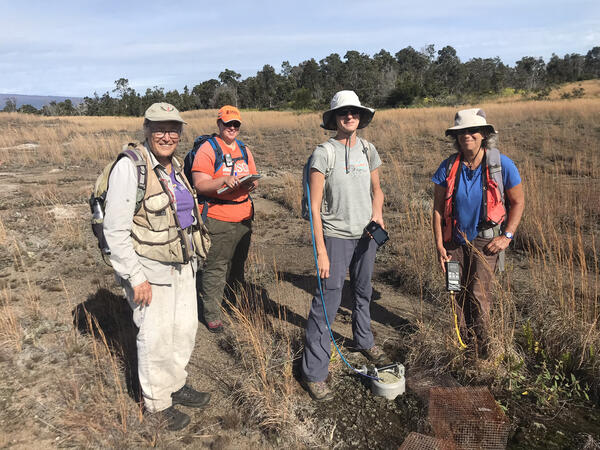
The Restoration Assessment and Monitoring Program for the Southwest (RAMPS) helps land management agencies develop successful techniques for improving land condition in dryland ecosystems of the Southwest. RAMPS has created a hub for information and tools to help managers identify strategies to restore degraded lands.
California’s Channel Islands were once home to cloud forests, lush groves of pines and oaks and shrubs, covered in moss and lichens, but this unique ecosystem was lost to overgrazing. USGS scientists are restoring these cloud forests by rebuilding three key components: soil, water, and plants.
Restoring drylands across the western U.S. is notoriously challenging due to highly variable and unpredictable precipitation. USGS scientists are using genetics to identify native plant seeds that are best adapted to survive and thrive in this harsh landscape.
Habitat models can provide critical information on the current and potential distribution of plant species, as well as help target and support conservation efforts. Despite their potential utility in public land management, model use may be constrained by a variety of factors including staff access to and trust in models. In this project, we seek to bring together model users and model developers...
Fostering greater use of habitat models for managing rare and invasive plants on public lands
Habitat models can provide critical information on the current and potential distribution of plant species, as well as help target and support conservation efforts. Despite their potential utility in public land management, model use may be constrained by a variety of factors including staff access to and trust in models. In this project, we seek to bring together model users and model developers...
Riparian plant communities, associated with rivers and streams, are ecologically and culturally important areas in the southwestern U.S. Despite covering less than 2% of the land area in the southwest, the resources provided by these communities make them valuable to wildlife, the public, scientists, and resource managers.
To support the Department of Interior's bureaus, states, and local communities, we are developing 1) a document highlighting remote sensing approaches that can be leveraged for site prioritization, recovery design, and long-term assessments of recovery trends, and 2) data products of vegetation conditions, change, recovery potential, and risk of exotic plant invasion on mine lands. We will...
Spatiotemporal conditions of vegetation and invasive plant species on mine lands.
To support the Department of Interior's bureaus, states, and local communities, we are developing 1) a document highlighting remote sensing approaches that can be leveraged for site prioritization, recovery design, and long-term assessments of recovery trends, and 2) data products of vegetation conditions, change, recovery potential, and risk of exotic plant invasion on mine lands. We will...
The USGS is developing innovative Phragmites control measures to keep this rapidly spreading invasive plant from further expanding its range into new wetland habitats and to aid in the development of successful restoration strategies. Scientists are conducting studies and field tests to determine (1) if microbes (i.e., fungi and bacteria) that live within and around Phragmites are enabling the...
Invasive Phragmites Science: Using Microbial Interactions to Foster the Restoration of Great Lakes Wetlands
The USGS is developing innovative Phragmites control measures to keep this rapidly spreading invasive plant from further expanding its range into new wetland habitats and to aid in the development of successful restoration strategies. Scientists are conducting studies and field tests to determine (1) if microbes (i.e., fungi and bacteria) that live within and around Phragmites are enabling the...
This project analyzes on-the-ground plant monitoring data across sagebrush and rangeland ecosystems to examine how fire, climate, topography, and plant communities influence the success of invasive annual grasses after fires.
Predicting risk of annual grass invasion following fire in sagebrush steppe and rangeland ecosystems
This project analyzes on-the-ground plant monitoring data across sagebrush and rangeland ecosystems to examine how fire, climate, topography, and plant communities influence the success of invasive annual grasses after fires.
USGS Director David Applegate and Others Learn About Invasive Phragmites australis
USGS Director David Applegate along with Associate Director Anne Kinsinger and Dr. Kurt Kowalski listen to Dr. Wes Bickford describe invasive Phragmites australis and the research being done at the Great Lakes Science Center to control it. Photo Credit: Josh Miller (USGS)
Biological carbon sequestration is the natural ability of life and ecosystems to store carbon. Forests, peat marshes, and coastal wetlands are particularly good as storing carbon. Carbon can be stored in plant tissue, such as long-lived tree bark or in extensive root systems. Microbes break down plant and animal tissue through decomposition.
A basic overview of the nitrogen cycle. Red arrows represent the portions of the nitrogen cycle (decomposition and nitrification) that are performed by our laboratory’s microbial culture.
Tidal Freshwater Forest Transitioning to Brackish Marsh, Pamunkey River, Virgina
Tidal freshwater forest transitioning to brackish marsh along the Pamunkey River, Virginia, as low-level salinization kills trees (forming ‘ghost forest’) that are replaced with marsh plants.
Habitat models can provide critical information on the current and potential distribution of plant species, as well as help target and support conservation efforts. Despite their potential utility in public land management, model use may be constrained by a variety of factors including staff access to and trust in models. In this project, we seek to bring together model users and model developers...
Fostering greater use of habitat models for managing rare and invasive plants on public lands
Habitat models can provide critical information on the current and potential distribution of plant species, as well as help target and support conservation efforts. Despite their potential utility in public land management, model use may be constrained by a variety of factors including staff access to and trust in models. In this project, we seek to bring together model users and model developers...
Riparian plant communities, associated with rivers and streams, are ecologically and culturally important areas in the southwestern U.S. Despite covering less than 2% of the land area in the southwest, the resources provided by these communities make them valuable to wildlife, the public, scientists, and resource managers.
To support the Department of Interior's bureaus, states, and local communities, we are developing 1) a document highlighting remote sensing approaches that can be leveraged for site prioritization, recovery design, and long-term assessments of recovery trends, and 2) data products of vegetation conditions, change, recovery potential, and risk of exotic plant invasion on mine lands. We will...
Spatiotemporal conditions of vegetation and invasive plant species on mine lands.
To support the Department of Interior's bureaus, states, and local communities, we are developing 1) a document highlighting remote sensing approaches that can be leveraged for site prioritization, recovery design, and long-term assessments of recovery trends, and 2) data products of vegetation conditions, change, recovery potential, and risk of exotic plant invasion on mine lands. We will...
The USGS is developing innovative Phragmites control measures to keep this rapidly spreading invasive plant from further expanding its range into new wetland habitats and to aid in the development of successful restoration strategies. Scientists are conducting studies and field tests to determine (1) if microbes (i.e., fungi and bacteria) that live within and around Phragmites are enabling the...
Invasive Phragmites Science: Using Microbial Interactions to Foster the Restoration of Great Lakes Wetlands
The USGS is developing innovative Phragmites control measures to keep this rapidly spreading invasive plant from further expanding its range into new wetland habitats and to aid in the development of successful restoration strategies. Scientists are conducting studies and field tests to determine (1) if microbes (i.e., fungi and bacteria) that live within and around Phragmites are enabling the...
This project analyzes on-the-ground plant monitoring data across sagebrush and rangeland ecosystems to examine how fire, climate, topography, and plant communities influence the success of invasive annual grasses after fires.
Predicting risk of annual grass invasion following fire in sagebrush steppe and rangeland ecosystems
This project analyzes on-the-ground plant monitoring data across sagebrush and rangeland ecosystems to examine how fire, climate, topography, and plant communities influence the success of invasive annual grasses after fires.
Invasive plants negatively impact our water, wildlife, and way of life. Current management tools are not cutting it, so a multi-agency research team is using molecular biotechnology to develop new species-specific treatments that help land managers improve the natural resources that we depend on and have more management options during droughts, floods, and other periods of plant stress. This...
Invasive Phragmites Science: Using Cutting-Edge Genetic Approaches to Develop New Management Tools for the Control of Invasive Phragmites
Invasive plants negatively impact our water, wildlife, and way of life. Current management tools are not cutting it, so a multi-agency research team is using molecular biotechnology to develop new species-specific treatments that help land managers improve the natural resources that we depend on and have more management options during droughts, floods, and other periods of plant stress. This...
The saguaro cactus ( Carnegiea gigantea) is a keystone species that grows only in the Sonoran Desert of northern Mexico and the southwestern United States. The USGS’ Southwest Biological Science Center is working to better understand the species’ biological features, its role as a keystone species that supports greater than 100 other plant and animal species, and its responses to extreme drought...
The iconic giant saguaro cactus in the Sonoran Desert
The saguaro cactus ( Carnegiea gigantea) is a keystone species that grows only in the Sonoran Desert of northern Mexico and the southwestern United States. The USGS’ Southwest Biological Science Center is working to better understand the species’ biological features, its role as a keystone species that supports greater than 100 other plant and animal species, and its responses to extreme drought...
The spread of highly-invasive non-native plant species in Hawaiʻi’s forests may be reducing freshwater availability across the islands. However, little information has been collected to determine the effects of highly-invasive non-native plant species on freshwater resources. The lack of information, in turn, limits the development of effective management strategies for preserving Hawaiʻi’s...
Effects of High-Priority Non-Native and Dominant Native Plant Species on the Water Cycle
The spread of highly-invasive non-native plant species in Hawaiʻi’s forests may be reducing freshwater availability across the islands. However, little information has been collected to determine the effects of highly-invasive non-native plant species on freshwater resources. The lack of information, in turn, limits the development of effective management strategies for preserving Hawaiʻi’s...
The "Phragmites Management and Variable Great Lakes Water Levels" GeoNarrative presents research by the US Geological Survey and US Fish and Wildlife Service on how Great Lakes water levels affect expansion and management of coastal Phragmites populations.
Effects of Great Lakes water levels on coastal populations of Phragmites australis GeoNarrative
The "Phragmites Management and Variable Great Lakes Water Levels" GeoNarrative presents research by the US Geological Survey and US Fish and Wildlife Service on how Great Lakes water levels affect expansion and management of coastal Phragmites populations.
Drylands (sometimes called ‘deserts’ or ‘arid and semi-arid' ecosystems) are defined by water scarcity. Understanding how land-use activities may effect dryland ecosystems and dryland ecological processes is a high priority for land conservation and management. Grazing by domestic livestock (typically cattle but also sheep and goats) is the most widespread land-use in drylands globally and a large...
Drought & Grazing Experiment: Understanding Impacts and Identifying Mitigation Strategies
Drylands (sometimes called ‘deserts’ or ‘arid and semi-arid' ecosystems) are defined by water scarcity. Understanding how land-use activities may effect dryland ecosystems and dryland ecological processes is a high priority for land conservation and management. Grazing by domestic livestock (typically cattle but also sheep and goats) is the most widespread land-use in drylands globally and a large...
Many non-native fish, invertebrates, and plants have colonized the Sacramento-San Joaquin Delta (Delta) of California, the landward most region of the San Francisco Estuary. Included among these invasive species is the water primrose ( Ludwigia spp .), an aggressive floating aquatic plant that is native to South and Central America and parts of the US, but invasive in California. Water primrose is...
Ecosystem Engineering Impacts of Water Primrose in the Sacramento-San Joaquin Delta
Many non-native fish, invertebrates, and plants have colonized the Sacramento-San Joaquin Delta (Delta) of California, the landward most region of the San Francisco Estuary. Included among these invasive species is the water primrose ( Ludwigia spp .), an aggressive floating aquatic plant that is native to South and Central America and parts of the US, but invasive in California. Water primrose is...
In California, drought and warmer climates have increased the prevalence, severity, and duration of wildfires. These fires have destroyed over 129 million trees. In the aftermath of this devastation, there is heightened urgency to increase the capacity of seedling production, particularly for the lower-elevation and private lands that CAL FIRE is responsible to help manage. To support CAL FIRE in...
Researching Climate Conditions for CAL FIRE Wildfire Restoration Efforts
In California, drought and warmer climates have increased the prevalence, severity, and duration of wildfires. These fires have destroyed over 129 million trees. In the aftermath of this devastation, there is heightened urgency to increase the capacity of seedling production, particularly for the lower-elevation and private lands that CAL FIRE is responsible to help manage. To support CAL FIRE in...
These data were compiled as a part of a landscape conservation design effort for the sagebrush biome, and are the result of applying a spatially explicit model that assessed geographic patterns in sagebrush ecological integrity and used these results to identify Core Sagebrush Areas (CSAs), Growth Opportunity Areas (GOAs), and Other Rangeland Areas (ORAs). Our overall objective in this...
The National Vegetation Classification (NVC) is your guide to inventorying plant communities. The standard allows users to produce uniform statistics about vegetation resources across the nation. CSAS&L actively participates in the development of this important standard through our involvement with the FGDC Vegetation Subcommittee and the ESA Vegetation Panel.
USGS Director David Applegate and Others Learn About Invasive Phragmites australis
USGS Director David Applegate along with Associate Director Anne Kinsinger and Dr. Kurt Kowalski listen to Dr. Wes Bickford describe invasive Phragmites australis and the research being done at the Great Lakes Science Center to control it. Photo Credit: Josh Miller (USGS)
Biological carbon sequestration is the natural ability of life and ecosystems to store carbon. Forests, peat marshes, and coastal wetlands are particularly good as storing carbon. Carbon can be stored in plant tissue, such as long-lived tree bark or in extensive root systems. Microbes break down plant and animal tissue through decomposition.
A basic overview of the nitrogen cycle. Red arrows represent the portions of the nitrogen cycle (decomposition and nitrification) that are performed by our laboratory’s microbial culture.
Tidal Freshwater Forest Transitioning to Brackish Marsh, Pamunkey River, Virgina
Tidal freshwater forest transitioning to brackish marsh along the Pamunkey River, Virginia, as low-level salinization kills trees (forming ‘ghost forest’) that are replaced with marsh plants.
A prairie sunflower (Helianthus petiolaris) stands out from the dry landscape of sand and beach grass at West Beach in Indiana Dunes National Park. Photo credit: Johanna Nifosi, USGS.
Hawkmoth flying near milkweed plant in North Dakota
Hawkmoth flying near milkweed plant in North Dakota. Northern Prairie Wildlife Research Center is monitoring milkweed populations across the Central United States.
Connecting powerline rights-of-way vegetation management to improve pollinator habitat. A USGS RAMPS technician samples pollinating insects along the Salt River Project powerline that crosses through Apache-Sitgreaves and Tonto National Forests.
The extensive rangelands across the Western United States are threatened by invasive grasses, climate change, and altered fire regimes that can disturb the landscape. The largely semi-arid lands are also important for the survival of species that need undisturbed sagebrush ecosystems to thrive.
Lesley DeFalco works on post-fire plant surveys in Nevada
Research scientist Lesley DeFalco works on native and invasive annual plant sampling at the site of the Tramp Fire,one of 12 fires for which the USGS and the BLM are implementing landscape scale restoration treatments.
Three researchers on the summit of Dancing Lady Mountain set up tapes and grids to complete a Global Observation Research Initiative in Alpine Environments network (GLORIA) vegetation survey.
Researchers evaluate vegetation during a Global Observation Research Initiative in Alpine (GLORIA) alpine plant survey near the summit of Seward Mountain in Glacier National Park, Montana.
Eyes on Earth Episode 12 – Plant Health via Satellite (NDVI)
A farmer at the foot of a corn stalk can tell how well the plant is faring. That same farmer might survey his entire field for crop health. But assessing the health of crops or forests at regional, national, and international scales requires remote sensing, most often via satellite.
A new strategy to help unleash USGS eDNA capabilities
Imagine you could use just a few drops of water to know what sorts of animals and plants were present in an area. What an incredible tool this would...
Identifying High-Impact Invasive Plants to Watch for in the Mid-Atlantic
The Northeast CASC University Co-Director and collaborators identified 32 high-impact invasive species known to have negative ecological and economic...
Slow, but Steady Improvement: 25 Years of Monitoring Reveals Impacts of the Northwest Forest Plan on Watersheds
A team of U.S. Geological Survey, U.S. Forest Service, and Oregon State University scientists published a report summarizing a quarter century of data...
Under the Endangered Species Act (ESA), plant and animal species may be listed as either endangered or threatened. “Endangered” means a species is in danger of extinction throughout all or a significant portion of its range. “Threatened” means a species is likely to become endangered within the foreseeable future. States have their own ESA-type laws, so species can have different Threatened...
What are the differences between endangered, threatened, imperiled, and at-risk species?
Under the Endangered Species Act (ESA), plant and animal species may be listed as either endangered or threatened. “Endangered” means a species is in danger of extinction throughout all or a significant portion of its range. “Threatened” means a species is likely to become endangered within the foreseeable future. States have their own ESA-type laws, so species can have different Threatened...
An invasive species is an introduced, nonnative organism (disease, parasite, plant, or animal) that begins to spread or expand its range from the site of its original introduction and that has the potential to cause harm to the environment, the economy, or to human health. A few well-known examples include the unintentional introduction of the West Nile virus, chestnut blight, the South American...
What is an invasive species and why are they a problem?
An invasive species is an introduced, nonnative organism (disease, parasite, plant, or animal) that begins to spread or expand its range from the site of its original introduction and that has the potential to cause harm to the environment, the economy, or to human health. A few well-known examples include the unintentional introduction of the West Nile virus, chestnut blight, the South American...
Chinese tallow has been cultivated in nurseries and sold as an ornamental tree used for landscaping; however, it is now classified as a nuisance species in some locations and can no longer be sold. It has separate pollen and seed-bearing flowers, and seeds can be spread by birds and by moving water. Chinese tallow has spread from South Carolina all the way down to Florida, west into Texas, and has...
How far has Chinese tallow spread in the United States?
Chinese tallow has been cultivated in nurseries and sold as an ornamental tree used for landscaping; however, it is now classified as a nuisance species in some locations and can no longer be sold. It has separate pollen and seed-bearing flowers, and seeds can be spread by birds and by moving water. Chinese tallow has spread from South Carolina all the way down to Florida, west into Texas, and has...
The invasive Chinese tallow tree has the ability to reach reproductive age in as little as 3 years and to remain productive for at least 60 years. It does not seem to have a preference for disturbed areas over undisturbed areas and can grow in a variety of places. It can also grow in both full sunlight and shade. It is more tolerant of salinity and flooding than quite a few other native species...
How do Chinese tallow's characteristics make it such an aggressive invader?
The invasive Chinese tallow tree has the ability to reach reproductive age in as little as 3 years and to remain productive for at least 60 years. It does not seem to have a preference for disturbed areas over undisturbed areas and can grow in a variety of places. It can also grow in both full sunlight and shade. It is more tolerant of salinity and flooding than quite a few other native species...
Buffelgrass is a perennial grass from Africa that is invasive to the Sonoran Desert of the Southwest United States, where it threatens desert ecosystems by out-competing native plants and altering fire regimes. It has the potential to transform the Sonoran Desert ecosystem from a diverse assemblage of plants to a grassland monoculture. Buffelgrass was brought to Arizona in the 1930s for erosion...
Tamarisk is an invasive shrub or small tree that is found across the American West. Also known as saltcedar, tamarisk favors sites that are inhospitable to native streamside plants because of high salinity, low water availability, and altered streamflow regimes created by dams. Researchers debate the extent of tamarisk’s negative impacts, but this invasive species can and does alter habitat...
Loss of plant diversity is the primary cause of native bee decline. About 30-50% of all native bees are highly specialized, so if the plant they rely on disappears, the bees go away. If the bees disappear, the plant is unable to reproduce and dies out. While some of the plants pollinated by native bees are important food crops, other plants pollinated by native bees are critical for healthy...
Does the loss of plant diversity affect the health of native bees?
Loss of plant diversity is the primary cause of native bee decline. About 30-50% of all native bees are highly specialized, so if the plant they rely on disappears, the bees go away. If the bees disappear, the plant is unable to reproduce and dies out. While some of the plants pollinated by native bees are important food crops, other plants pollinated by native bees are critical for healthy...
Bees feed on and require both nectar and pollen. The nectar is for energy and the pollen provides protein and other nutrients. Most pollen is used by bees as larvae food, but bees also transfer it from plant-to-plant, providing the pollination services needed by plants and nature as a whole. Learn more: USGS Native Bee Inventory and Monitoring Program Bees of the Northeastern U.S.
About 75% of North American plant species require an insect—mostly bees—to move their pollen from one plant to another to effect pollination. Unlike the well-known behavior of the non-native honeybees, there is much that we don’t know about native bees. Many native bees are smaller in size than a grain of rice. Of approximately 4,000 native bee species in the United States, 10% have not been named...
What is the role of native bees in the United States?
About 75% of North American plant species require an insect—mostly bees—to move their pollen from one plant to another to effect pollination. Unlike the well-known behavior of the non-native honeybees, there is much that we don’t know about native bees. Many native bees are smaller in size than a grain of rice. Of approximately 4,000 native bee species in the United States, 10% have not been named...
Do you enjoy a hot cup of coffee, a juicy peach, an-apple-a-day, almonds, rich and creamy dates, a handful of plump cashews, or vine-ripened tomatoes? Do you enjoy seeing the native flowers and plants that surround you? If so, you depend on pollinators. Wherever flowering plants flourish, pollinating bees, birds, butterflies, bats and other animals are hard at work, providing vital but often...
Why are pollinating bats, birds, bees, butterflies, and other animals important?
Do you enjoy a hot cup of coffee, a juicy peach, an-apple-a-day, almonds, rich and creamy dates, a handful of plump cashews, or vine-ripened tomatoes? Do you enjoy seeing the native flowers and plants that surround you? If so, you depend on pollinators. Wherever flowering plants flourish, pollinating bees, birds, butterflies, bats and other animals are hard at work, providing vital but often...
Wetlands provide habitat for thousands of species of aquatic and terrestrial plants and animals. Wetlands are valuable for flood protection, water quality improvement, shoreline erosion control, natural products, recreation, and aesthetics. Wetlands are among the most productive habitats on earth providing shelter and nursery areas for commercially and recreationally important animals like fish...
Wetlands are transitional areas, sandwiched between permanently flooded deepwater environments and well-drained uplands, where the water table is usually at or near the surface or the land is covered by shallow water. They include mangroves, marshes (salt, brackish, intermediate, and fresh), swamps, forested wetlands, bogs, wet prairies, prairie potholes, and vernal pools. In general terms...