Oso Landslide
Images
Browse our photos of landslide research and post-landslide investigations.
Oso Landslide
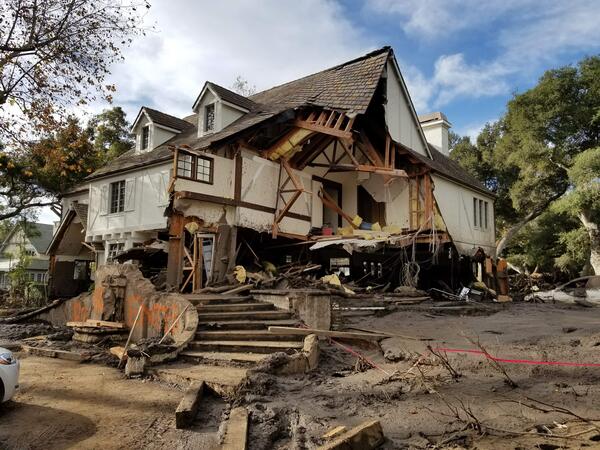
Home damaged by rainfall-triggered debris flow - Carrol County, Kentucky
Home damaged by rainfall-triggered debris flow - Carrol County, KentuckyA landslide caused by heavy rainfall in April 2014 destroyed a building in Carroll County, KY.
Home damaged by rainfall-triggered debris flow - Carrol County, Kentucky
Home damaged by rainfall-triggered debris flow - Carrol County, KentuckyA landslide caused by heavy rainfall in April 2014 destroyed a building in Carroll County, KY.
Oblique aerial photograph of the Oso, Washington landslide, showing the entire extent of the landslide source area and path.
Location: State Route 530, Oso, Washington
Oblique aerial photograph of the Oso, Washington landslide, showing the entire extent of the landslide source area and path.
Location: State Route 530, Oso, Washington
Catastrophic landslide near Oso, WA, Mar. 22, 2014.
Catastrophic landslide near Oso, WA, Mar. 22, 2014.Aerial photograph of catastrophic landslide that occurred near Oso, Washington, March 22, 2014.
Catastrophic landslide near Oso, WA, Mar. 22, 2014.
Catastrophic landslide near Oso, WA, Mar. 22, 2014.Aerial photograph of catastrophic landslide that occurred near Oso, Washington, March 22, 2014.
Potential landslide indicator - Snohomish County, Washington
Potential landslide indicator - Snohomish County, WashingtonCracks on a gravel road formed during the reactivation of a slow, deep landslide. The cracks can be indicators of local movement in or around the road or in this case, are a sign of a much larger landslide.
Potential landslide indicator - Snohomish County, Washington
Potential landslide indicator - Snohomish County, WashingtonCracks on a gravel road formed during the reactivation of a slow, deep landslide. The cracks can be indicators of local movement in or around the road or in this case, are a sign of a much larger landslide.
Potential landslide indicator - Island County, Washington
Potential landslide indicator - Island County, WashingtonCracks on a gravel road formed during the initial movement of a slow, deep landslide. The cracks can be indicators of local movement in or around the road or in this case, a much larger landslide and damaged many homes.
Potential landslide indicator - Island County, Washington
Potential landslide indicator - Island County, WashingtonCracks on a gravel road formed during the initial movement of a slow, deep landslide. The cracks can be indicators of local movement in or around the road or in this case, a much larger landslide and damaged many homes.
Potential landslide indicator - Island County, Washington
Potential landslide indicator - Island County, WashingtonLarge cracks formed in this yard after a large landslide occurred downslope of a home. Though the home wasn't directly impacted by the landslide, the cracks in the yard are indicators of potential additional movement and increased landslide risk.
Potential landslide indicator - Island County, Washington
Potential landslide indicator - Island County, WashingtonLarge cracks formed in this yard after a large landslide occurred downslope of a home. Though the home wasn't directly impacted by the landslide, the cracks in the yard are indicators of potential additional movement and increased landslide risk.
Home damaged by debris flow - Island County, Washington
Home damaged by debris flow - Island County, WashingtonA reactivated landslide destroyed this home that was built on the landslide. Initial, slow landslide movement allowed the occupant to escape. Island County, WA. March 2013
Home damaged by debris flow - Island County, Washington
Home damaged by debris flow - Island County, WashingtonA reactivated landslide destroyed this home that was built on the landslide. Initial, slow landslide movement allowed the occupant to escape. Island County, WA. March 2013
Photograph of the channel station showing the laser distance meter (in red circle) high above the channel used to measure stage (height) of flow in the channel.
Debris flow damage following the 2012 Waldo Canyon fire, Colorado, U.S.
Toe of the active Cleveland Corral landslide in 2011, perched above US Highway 50 in distance. Movement typically only occurs during wet winter and spring months.
Filled debris basin, Los Angeles County, California
Filled debris basin, Los Angeles County, CaliforniaGould debris basin at a watershed outlet in Los Angeles County, California that has been filled with mud and debris. This photo was taken in 2010 after a major debris flow in the 2009 Station Fire burn area. The metal tower in the foreground is approximately 10 meters high.
Filled debris basin, Los Angeles County, California
Filled debris basin, Los Angeles County, CaliforniaGould debris basin at a watershed outlet in Los Angeles County, California that has been filled with mud and debris. This photo was taken in 2010 after a major debris flow in the 2009 Station Fire burn area. The metal tower in the foreground is approximately 10 meters high.
Elliot State Forest.
An unfilled debris basin at the outlet of Gould Canyon in Los Angeles County, California. The metal tower in the foreground is approximately 10 meters high.
Oblique photograph of Knife Ridge monitoring site showing approximate soil pit locations.
A USGS postfire monitoring station in the 2009 Station Fire burn area
A USGS postfire monitoring station in the 2009 Station Fire burn areaA USGS monitoring station in the 2009 Station Fire. The Station Fire burned approximately 160,000 acres from August to October 2009, including steep terrain in the Angeles National Forest. The USGS installed this monitoring station approximately 1 month after the fire was contained to collect information about rainfall and postfire soil properties.
A USGS postfire monitoring station in the 2009 Station Fire burn area
A USGS postfire monitoring station in the 2009 Station Fire burn areaA USGS monitoring station in the 2009 Station Fire. The Station Fire burned approximately 160,000 acres from August to October 2009, including steep terrain in the Angeles National Forest. The USGS installed this monitoring station approximately 1 month after the fire was contained to collect information about rainfall and postfire soil properties.
Well-developed rills in the 2009 Station Fire. Rills are small channels cut into the hillside by erosion processes. They have the potential to generate a large amount of sediment, which may contribute to debris-flow formation.
A USGS walks on a very steep, burned hillslope in the 2009 Station Fire, Angeles National Forest, California. The wildfire has removed nearly all of the vegetation from the hillslope and well-developed rills cover the ground's surface. Rills are small channels cut into the hillside by erosion processes.
A USGS postfire monitoring station in the 2009 Station Fire burn area
A USGS postfire monitoring station in the 2009 Station Fire burn areaA USGS monitoring station in the 2009 Station Fire. The Station Fire burned approximately 160,000 acres from August to October 2009, including steep terrain in the Angeles National Forest. The USGS installed this monitoring station approximately 1 month after the fire was contained to collect information about rainfall and postfire soil properties.
A USGS postfire monitoring station in the 2009 Station Fire burn area
A USGS postfire monitoring station in the 2009 Station Fire burn areaA USGS monitoring station in the 2009 Station Fire. The Station Fire burned approximately 160,000 acres from August to October 2009, including steep terrain in the Angeles National Forest. The USGS installed this monitoring station approximately 1 month after the fire was contained to collect information about rainfall and postfire soil properties.
The Upper monitoring station at Chalk Cliffs, CO.
View of the west channel and Upper monitoring station (Station 1), Chalk Cliffs, CO.